Posted on Leave a comment

15 Fun Rainy Day Activities for Toddlers to Keep Them Busy Indoors

Rainy days can feel challenging when you have an energetic toddler at home.

The weather keeps everyone indoors.

Outdoor play is cancelled.

Your little one starts looking for something new to do every few minutes.

And before you know it, you hear the familiar question:

“What can I play now?”

While it may be tempting to turn on cartoons or hand over a device, rainy days can actually become wonderful opportunities for creativity, bonding, and learning.

Toddlers don’t need expensive toys or complicated activities to have fun.

Often, the simplest ideas create the biggest smiles.

A cardboard box can become a car.

A blanket can become a fort.

A kitchen cupboard can become a learning adventure.

The goal is not to keep your toddler entertained every second.

It is to create meaningful moments where they can explore, imagine, and spend quality time with you.

These rainy day activities for toddlers are easy to set up, budget-friendly, and perfect for encouraging creativity, movement, and development.

Here are 15 indoor activities to keep your toddler happily engaged on rainy days.

1. Create a Blanket Fort

Few things excite toddlers more than having their own little hideaway.

Building a blanket fort is a simple activity that can create hours of imaginative play.

Use:

  • Blankets
  • Pillows
  • Cushions
  • Chairs
  • Favourite toys

Once the fort is ready, your toddler can turn it into:

  • A reading corner
  • A pretend camping site
  • A cosy nap area
  • A teddy bear house

This activity encourages creativity while helping children develop imagination and storytelling skills.

You can make it even more special by bringing in some books and spending time reading together inside the fort.

Why toddlers love it:

  • Encourages pretend play
  • Builds creativity
  • Creates bonding moments

Parent tip: Let your toddler help build the fort. The process is often more exciting than the finished result.

2. Have a Toddler-Friendly Treasure Hunt

A treasure hunt is one of the easiest indoor activities for toddlers because it requires very little preparation.

Hide simple objects around the house and give your toddler clues to find them.

Ideas:

  • Their favourite toy
  • Colourful blocks
  • Picture cards
  • Stuffed animals
  • Safe household items

For younger toddlers, keep it simple:

“Can you find something blue?”

“Where is your teddy?”

“Can you find the ball?”

This activity helps develop:

  • Problem-solving skills
  • Observation
  • Vocabulary
  • Memory

It also turns an ordinary afternoon into an exciting adventure.

Parent tip: Adjust the difficulty based on your child’s age. The goal is fun, not frustration.

3. Set Up a Simple Sensory Play Activity

Toddlers learn through touching, feeling, and exploring.

Sensory play allows children to discover different textures while developing important skills.

Easy sensory activities include:

Rice Sensory Bin

Add coloured rice with cups, spoons, and containers for scooping.

Water Play

Use a small container of water with cups and toys.

Pasta Play

Dry pasta can be used for sorting and transferring activities.

Ice Exploration

Let toddlers explore ice cubes melting with warm water.

Sensory play can support:

  • Fine motor skills
  • Concentration
  • Creativity
  • Independence

You don’t need fancy materials.

Simple household items can create meaningful learning experiences.

Parent tip: Always supervise sensory play and choose materials that are safe for your child’s age.

4. Bake Something Together

A rainy day is the perfect time for a little kitchen adventure.

Toddlers love being involved in “grown-up” activities.

Let them help with simple tasks like:

  • Pouring ingredients
  • Stirring mixtures
  • Decorating cookies
  • Arranging toppings
  • Washing fruits

Cooking together teaches:

  • Following instructions
  • Counting
  • Measuring
  • Patience
  • Confidence

It also creates a special memory between parent and child.

The final product doesn’t need to be perfect.

The fun is in the process.

Parent tip: Expect a little mess. The memories are worth it.

5. Create an Indoor Obstacle Course

Toddlers have lots of energy, even when they cannot go outside.

An indoor obstacle course is a great way to encourage movement while staying at home.

Use safe household items:

  • Pillows to climb over
  • Tape lines to follow
  • Chairs to crawl under
  • Soft toys to collect

Create simple challenges:

“Jump to the pillow.”

“Crawl through the tunnel.”

“Walk along the line.”

This activity helps develop:

  • Balance
  • Coordination
  • Gross motor skills
  • Confidence

It also helps burn off some toddler energy before nap time or bedtime.

Parent tip: Keep the course simple and always remove anything that could cause falls.

6. Create Simple Arts and Crafts

Arts and crafts are some of the best rainy day activities for toddlers because they allow children to express their creativity while developing important skills.

You don’t need complicated craft supplies.

Simple materials from around the house can become fun projects:

  • Paper and crayons
  • Stickers
  • Cardboard boxes
  • Cotton balls
  • Paper rolls
  • Child-safe glue

Easy toddler craft ideas:

Make a Family Drawing

Ask your toddler to draw family members and talk about everyone in the picture.

Create Animal Crafts

Use paper plates or cardboard to create simple animals.

Make a Rainy Day Artwork

Let your child paint or colour their own version of the weather outside.

Craft activities help toddlers develop:

  • Fine motor skills
  • Creativity
  • Imagination
  • Confidence

Remember, the goal is not to create a perfect artwork.

The process of exploring and creating is what matters most.

Parent tip: Display your child’s artwork at home. Toddlers feel proud when they see their creations valued.

7. Have a Living Room Dance Party

When toddlers are stuck indoors, they still need opportunities to move.

A simple dance party can instantly change the mood of a rainy afternoon.

Play your child’s favourite songs and encourage them to:

  • Dance freely
  • Copy your movements
  • Clap along with the rhythm
  • Pretend to be different animals

You can make it more exciting by adding:

  • Scarves for dancing
  • Musical instruments
  • A pretend concert

Dancing helps toddlers develop:

  • Coordination
  • Balance
  • Rhythm
  • Body awareness

It is also a wonderful way for parents and children to laugh together.

Sometimes the best memories come from the simplest moments.

Parent tip: Don’t worry about looking silly. Your toddler will love seeing you join their world.

8. Create a Reading Adventure

A rainy day is the perfect excuse to slow down and enjoy story time.

Instead of simply reading a book, turn it into an adventure.

Try:

  • Building a cosy reading corner
  • Letting your toddler choose the books
  • Using different voices for characters
  • Asking questions about the story

Questions you can ask:

“What do you think happens next?”

“How does the character feel?”

“Can you find the dog in the picture?”

Reading together supports:

  • Language development
  • Listening skills
  • Imagination
  • Parent-child bonding

For toddlers, reading is not just about learning words.

It is about creating a positive relationship with books.

Parent tip: Repeating the same favourite book is completely normal. Toddlers learn through repetition.

9. Try Simple Science Experiments

Toddlers are naturally curious.

A rainy day is a great opportunity to explore simple science concepts through play.

You can try easy experiments using household items.

Colour Mixing

Use water and food colouring to show how colours combine.

Ask:

“What happens when we mix blue and yellow?”

Sink or Float Activity

Place safe objects in water and let your toddler guess whether they will sink or float.

Ice Melting Experiment

Let your child observe how ice changes into water.

These activities introduce early science concepts while encouraging curiosity.

Toddlers learn best when they can touch, observe, and ask questions.

Parent tip: Focus on the experience rather than the result. Curiosity matters more than getting the “right answer.”

10. Build Something With Blocks

Blocks are one of the most valuable toys for toddlers because they encourage open-ended play.

A simple set of blocks can become:

  • A tall tower
  • A house
  • A bridge
  • A garage
  • A zoo

Building activities help toddlers develop:

  • Problem-solving skills
  • Creativity
  • Hand-eye coordination
  • Spatial awareness

You can join their play by asking:

“What are you building?”

“Who lives here?”

“Should we make a road too?”

Instead of telling them what to create, let them lead.

Open-ended play allows children to explore their own ideas.

Parent tip: Let your toddler’s imagination guide the activity. There is no wrong way to build.

Rainy days are not just days to survive.

They can become opportunities for meaningful connection.

Indoor play helps toddlers develop important skills while spending quality time with their parents.

Through simple activities, children learn:

  • How to solve problems
  • How to express creativity
  • How to communicate
  • How to explore independently
  • How to build confidence

More importantly, these moments strengthen your relationship.

Your toddler may not remember every activity you planned.

But they will remember the feeling of being loved, supported, and having fun with you.

Sometimes, the best childhood memories happen during ordinary days at home.

11. Create a Pretend Play Corner

Toddlers love pretending because it allows them to explore the world around them.

A simple pretend play corner can provide hours of entertainment.

You don’t need expensive toys.

Use items you already have at home:

  • A small table as a pretend shop
  • Empty containers for a pretend kitchen
  • Old clothes for dress-up
  • Stuffed animals for a pretend clinic
  • Boxes for a pretend house

Ideas for pretend play:

  • Cooking a pretend meal
  • Running a grocery store
  • Taking care of teddy bears
  • Playing doctor
  • Pretending to be a teacher

Pretend play helps toddlers develop:

  • Language skills
  • Social skills
  • Emotional understanding
  • Creativity

It also gives parents a chance to see the world from their child’s perspective.

Parent tip: Follow your toddler’s ideas instead of directing the game. Their imagination is the best guide.

12. Do a Toddler-Friendly Cleaning Activity

Believe it or not, toddlers often enjoy helping around the house.

They love feeling independent and being part of what adults do.

Turn simple chores into playful activities:

  • Matching socks
  • Wiping a table with a cloth
  • Putting toys away
  • Sorting laundry by colour
  • Watering plants

These activities teach:

  • Responsibility
  • Independence
  • Following instructions
  • Practical life skills

It also helps toddlers understand that they are an important part of the family.

The goal is not perfect cleaning.

It is giving them confidence and a sense of belonging.

Parent tip: Praise their effort, not the result. Toddlers learn through participation.

13. Make Homemade Playdough

Homemade playdough is an easy and affordable activity that can keep toddlers busy for a long time.

You can create different play ideas:

  • Make animals
  • Create pretend food
  • Build shapes
  • Practise letters and numbers
  • Use cookie cutters for designs

Playdough supports:

  • Fine motor development
  • Hand strength
  • Creativity
  • Concentration

For toddlers, squeezing, rolling, and shaping playdough is not just fun—it is a learning experience.

You can also add tools like:

  • Safe kitchen utensils
  • Plastic cutters
  • Rolling pins
  • Toy animals

Parent tip: Store homemade playdough properly and supervise younger toddlers during play.

14. Have a Family Movie and Snack Time

Sometimes, parents feel pressure to make every moment educational.

But relaxing together is also valuable.

A rainy day can be a wonderful opportunity for a cosy family moment.

Create a simple movie experience:

  • Make a comfortable blanket area
  • Prepare a toddler-friendly snack
  • Let your child choose a favourite movie
  • Cuddle together while watching

The goal is not just the movie.

It is the connection.

Talking about the story, laughing together, and sharing a relaxing moment helps strengthen your bond.

Parent tip: Balance screen time with interaction. Ask questions about the characters and story to make it more engaging.

15. Look Through Family Photos Together

Toddlers love seeing pictures of themselves and their family.

A rainy day is a perfect time to look back at memories together.

Show them:

  • Baby photos
  • Family trips
  • Birthday celebrations
  • Funny moments
  • Photos of when they were younger

Talk about what happened:

“Do you remember this day?”

“You were so tiny here.”

“Look at your funny expression!”

This activity helps toddlers develop:

  • Language skills
  • Memory
  • Family connection
  • Sense of identity

It also reminds parents how quickly children grow.

The little moments we capture today become precious memories tomorrow.

Parent tip: Create a simple family photo book that your toddler can look through independently.

A Simple Rainy Day Activity Checklist

When the rain keeps you indoors, remember you don’t need a complicated plan.

Try these easy ideas:

  • Build a blanket fort
  • Create a treasure hunt
  • Set up sensory play
  • Bake together
  • Create an obstacle course
  • Make crafts
  • Have a dance party
  • Read stories together
  • Try a simple experiment
  • Build with blocks
  • Play pretend games
  • Do simple chores together
  • Make playdough creations
  • Have family movie time
  • Look through old photos

The best rainy day activities for toddlers are not always the ones that require the most preparation.

Often, the simplest activities create the strongest connections.

Final Thoughts: Rainy Days Can Become Beautiful Memories

Rainy days with toddlers can feel challenging.

The energy.

The boredom.

The repeated requests for something new.

But these days can also become some of the sweetest memories.

Years from now, your child may not remember the exact activity you planned.

They may not remember the craft you made or the game you played.

But they will remember the feeling.

The laughter.

The attention.

The time you spent together.

Parenting is not about filling every minute with activities.

It is about creating moments where your child feels loved, connected, and valued.

So the next time rain keeps you indoors, don’t see it as a day ruined.

See it as an opportunity.

An opportunity to slow down.

To play.

To connect.

To create memories together.

Because sometimes, the ordinary days at home become the moments we treasure most.

Written by SY
A mum sharing personal parenting experiences, discoveries, and everyday lessons.
Frequently Asked Questions About Rainy Day Activities for Toddlers

The best rainy day activities for toddlers are simple, engaging activities that encourage creativity, movement, and learning.
Some popular ideas include sensory play, arts and crafts, pretend play, reading, baking, building blocks, and indoor obstacle courses.
The best activities are those that allow toddlers to explore while spending quality time with their parents.

To keep toddlers busy without screens, try hands-on activities such as:
Sensory play, Drawing and crafts, Building with blocks, Treasure hunts, Cooking together, Pretend play
Screen-free activities help toddlers develop creativity, independence, and problem-solving skills.

Yes. Indoor activities can support toddler development by encouraging language skills, fine motor skills, creativity, and emotional development.
Simple activities like reading, sorting, building, and pretend play help children learn through exploration.

You can entertain a toddler on a rainy day by creating simple play opportunities at home.
Try rotating activities throughout the day, such as crafts in the morning, quiet reading after lunch, and active play in the afternoon.
You do not need expensive toys – your attention and creativity are often enough.

Easy indoor activities for toddlers include:

Making a blanket fort, Playing with blocks, Baking simple treats, Creating artwork, Having a dance party, Looking through family photos

These activities require minimal preparation and can create meaningful bonding moments.

Toddlers benefit from a mix of active play, quiet activities, independent exploration, and interaction with caregivers.

There is no need to plan structured activities all day. Allowing children time to explore freely is also important for creativity and independence.

Shop Our Picks

Shopee Affiliate Storefront

Posted on Leave a comment

15 Family Lifestyle Ideas for New Parents with Babies (0–2 Years)

Becoming parents is one of life’s biggest adventures. Overnight, your routines change, your priorities shift, and suddenly your days revolve around feeding, naps, diaper changes, and cuddles. While life may feel busier than ever, it’s also the perfect time to build a family lifestyle that creates lasting memories and strengthens your bond with your little one.

As a mum, I used to think family time meant weekend trips, café hopping, or holidays. But after having my baby, I realised that the most meaningful moments often happened at home. Watching my little one giggle during tummy time, going for a short evening walk together, or simply reading the same bedtime story every night became moments I looked forward to.

The first two years of your baby’s life are filled with incredible milestones. These everyday experiences help your baby feel safe, loved, and connected. They also create routines that bring comfort to the whole family.

If you’re looking for family lifestyle ideas that are simple, affordable, and suitable for babies and toddlers under two years old, here are some ideas that have worked for our family.

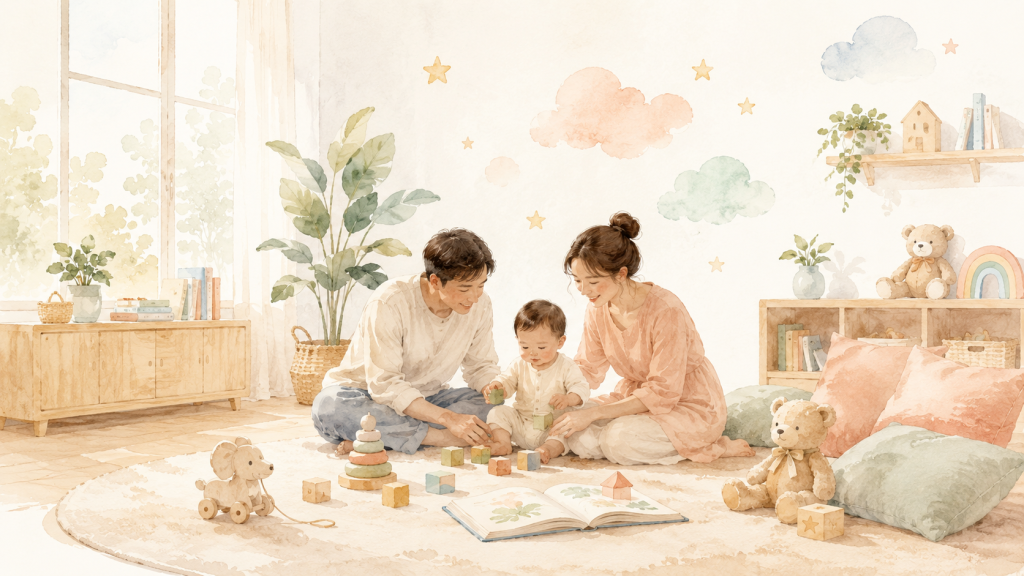
Family Lifestyle Ideas
Creating meaningful family moments through simple everyday activities, bonding, and mindful parenting with your baby.

Why Family Lifestyle Ideas Matter for Everyday Family Life

Family life is often filled with busy mornings, school runs, work commitments and daily responsibilities. While it may feel difficult to find extra time, creating intentional moments together can help families feel more connected.

Simple family lifestyle ideas encourage parents to focus on meaningful interactions rather than spending more money or planning complicated activities.

Whether it is having dinner together, reading a bedtime story or taking a short walk after school, these small routines can become special memories that children remember as they grow.

For busy parents, it is often the simple moments that create the strongest family connections.

1. Share at Least One Meal Together Every Day

Life with a baby can be unpredictable, and meal times don’t always go according to plan. Even so, try to have at least one meal each day where everyone sits together.

If your baby has started solids, let them join you in their high chair while the rest of the family eats. Even if they only nibble on a few bites, they’re learning by watching you.

Meal times are a wonderful opportunity to chat, smile, and interact. Describe the food, encourage your baby to explore different textures, and enjoy the moment without worrying about making a mess.

Remember, it’s not about having a perfect meal—it’s about spending time together.

2. Go for Daily Walks Together

One of the easiest family lifestyle ideas is simply getting outside.

Whether it’s a stroll around your neighbourhood, a nearby park, or your local lake, fresh air can do wonders for both parents and babies.

Your baby gets to experience different sights, sounds, and smells, while you enjoy a change of scenery and a chance to clear your mind.

We loved taking evening walks after dinner. It became our little family tradition, and it often helped our baby relax before bedtime.

You don’t need to travel far. Even a 20-minute walk can become one of the best parts of your day.

3. Read Together Every Day

Many parents think reading should only begin once their child can understand words, but it’s never too early to start.

Your baby loves hearing your voice. Reading aloud helps them become familiar with language, rhythm, and different sounds.

Choose colourful board books with simple pictures or textured pages. Don’t worry if your baby wants to turn pages quickly or loses interest after a few minutes—that’s completely normal.

Reading together is less about finishing the story and more about building a comforting routine that both of you enjoy.

Before you know it, your little one may be bringing their favourite books to you throughout the day.

4. Create a Simple Bedtime Routine

Babies thrive on consistency.

Having the same bedtime routine each night helps signal that it’s time to wind down and sleep.

Your routine doesn’t need to be complicated. For many families, it might look like this:

  • Warm bath
  • Clean nappy and pyjamas
  • Milk feed
  • Story time
  • Goodnight cuddles

Following the same sequence every evening can help your baby feel secure and relaxed.

It also creates special one-on-one time that parents can treasure, especially after a busy day.

5. Enjoy Floor Play Without Distractions

Some of the best toys for babies aren’t toys at all—they’re engaged parents.

Set aside 15 to 20 minutes each day to sit on the floor with your baby without checking your phone or multitasking.

Follow your baby’s lead. Let them crawl, stack blocks, shake rattles, or explore soft books while you talk, encourage, and celebrate their discoveries.

Your baby doesn’t need constant entertainment. They simply enjoy having you close by.

These moments strengthen your bond while supporting motor skills, confidence, and curiosity.

6. Celebrate Every Little Milestone

During the first two years, your baby reaches so many exciting milestones.

The first smile.

The first laugh.

Rolling over.

Sitting up.

Crawling.

Standing.

Taking those precious first steps.

Instead of focusing only on the big achievements, celebrate every little success along the way.

Take photos, write short journal entries, or keep a simple baby milestone book. Looking back on these memories months or years later is incredibly special.

Every baby develops at their own pace, so avoid comparing your child’s progress with others. Celebrate their unique journey.

7. Let Your Baby Join Everyday Family Activities

Not every learning experience needs to be planned.

Babies are naturally curious and love watching the world around them.

Place your baby safely in a high chair while you prepare dinner, fold laundry, or water your plants. Talk to them about what you’re doing, describe colours, count objects, or sing songs as you go.

These everyday conversations help expose your baby to language while making them feel included in family life.

Your baby doesn’t need constant stimulation—they simply love being part of your day.

8. Sing, Dance and Enjoy Music Together

You don’t need to be a great singer to make music part of your family’s daily routine. Babies love hearing familiar voices, and singing is a wonderful way to bond while supporting early language development.

Whether it’s nursery rhymes during diaper changes, dancing around the living room after dinner, or playing gentle music during playtime, these little moments often bring the biggest smiles.

When my little one started clapping along to songs, it became one of my favourite parts of the day. We still have a playlist filled with songs that instantly bring back those precious baby memories.

Music doesn’t have to be complicated—it simply adds joy to everyday family life.

9. Visit Parks and Let Your Baby Explore Nature

Fresh air and nature are wonderful for both babies and parents.

Even before your baby can walk, they enjoy looking at trees swaying in the wind, listening to birds chirping, feeling the breeze, and watching other children play.

Once they become toddlers, parks become exciting places to practise walking, climbing, and exploring safely.

Try bringing a picnic mat and spend some quiet time together. Point out flowers, butterflies, leaves, or clouds. These simple conversations help build your baby’s vocabulary while encouraging curiosity about the world around them.

Nature offers endless learning opportunities without requiring expensive toys or activities.

10. Create Monthly Family Traditions

Traditions don’t have to wait until your children are older.

Starting simple traditions while your baby is young creates something your family can look forward to every month.

Some ideas include:

  • Taking one family photo on the same day each month.
  • Measuring your baby’s height and weight.
  • Making handprint or footprint art.
  • Having a special Sunday breakfast together.
  • Visiting the same park every month.
  • Reading a new bedtime book together.

Years later, these traditions become beautiful memories that tell the story of your family’s journey together.

11. Encourage Daddy and Baby Bonding Time

While babies naturally spend a lot of time with mum, creating opportunities for daddy to build his own relationship with the baby is just as important.

This doesn’t need to be anything elaborate. It could be bath time, reading a bedtime story, taking the baby for a morning stroll, or simply enjoying floor play together.

Every parent interacts differently, and that’s perfectly okay. Babies benefit from spending time with both parents and learning through different styles of play, communication, and affection.

Watching my husband develop his own little routines with our baby has been one of the most heartwarming parts of our parenting journey.

12. Capture Everyday Moments, Not Just Special Occasions

It’s easy to remember to take photos on birthdays or holidays, but some of the most meaningful memories happen during ordinary days.

Take photos of your baby enjoying breakfast, taking a nap on Dad’s chest, playing with their favourite toy, or making funny faces during bath time.

These everyday moments often become the ones you treasure the most.

You could even create a digital photo album or print a few favourite pictures every year. Looking back at how quickly your little one has grown is both heartwarming and emotional.

Remember, not every photo needs to be perfect. Sometimes the messy, candid moments tell the best stories.

13. Limit Screen Time and Be Present

Modern parenting comes with plenty of distractions. It’s easy to find yourself checking messages, scrolling social media, or replying to emails while spending time with your baby.

I’ve caught myself doing this more than once.

Now, I try to put my phone aside during playtime, meals, and bedtime routines. Even if it’s only for 20 or 30 minutes, giving my child my full attention makes those moments much more meaningful.

Babies don’t need constant entertainment—they simply need responsive, loving interactions with the people who care for them.

Being fully present is one of the greatest gifts we can give our children.

14. Don’t Compare Your Family Journey with Others

Parenting today comes with endless advice, milestone charts, and social media posts showing picture-perfect family moments.

It’s easy to wonder if you’re doing enough.

But every baby develops at their own pace, and every family has different routines, values, and challenges.

Instead of comparing your child to others, celebrate your own family’s progress.

Maybe your baby finally slept through the night.

Maybe they tried a new food.

Maybe everyone managed to enjoy dinner together without any tears.

Those little victories deserve to be celebrated too.

The goal isn’t to create a perfect family lifestyle—it’s to create one that works for your family.

15. Remember to Look After Yourself Too

One lesson I’ve learned is that taking care of your family starts with taking care of yourself.

As new parents, it’s easy to put everyone else’s needs first.

Try to make time for small moments of self-care, even if it’s just enjoying a hot cup of coffee while it’s still warm, taking a short walk, reading a few pages of a book, or asking your partner to watch the baby while you rest.

Looking after yourself isn’t selfish—it helps you become a more patient, happier parent.

A happy family lifestyle begins with parents who also feel supported.

My Thoughts as a Mum

Before becoming a mum, I imagined family life would be filled with exciting trips and carefully planned activities.

The reality looked quite different.

There were sleepless nights, endless diaper changes, mountains of laundry, and days when simply getting everyone dressed felt like an achievement.

Yet, when I look back, those ordinary moments have become some of my favourite memories.

Watching my baby smile during tummy time, reading the same bedtime story every night, taking evening walks together, or cuddling on the sofa after a long day are the moments that truly shaped our family.

I’ve learned that creating a happy family lifestyle isn’t about doing more—it’s about slowing down and appreciating the little things.

Your baby won’t remember whether the house was perfectly tidy or whether dinner was homemade every night.

They’ll remember feeling loved, safe, and surrounded by people who enjoyed spending time with them.

Final Thoughts

Building a meaningful family lifestyle doesn’t require expensive holidays, packed schedules, or the latest parenting gadgets.

The first two years of your baby’s life are filled with countless opportunities to connect through everyday routines. Reading together, sharing meals, exploring nature, singing songs, and simply being present all contribute to your baby’s development while creating treasured family memories.

Don’t worry about trying every idea at once. Start with one or two simple habits that suit your family’s routine and let them grow naturally over time.

The most important thing isn’t creating the “perfect” family lifestyle – it’s creating one filled with love, laughter, and meaningful moments together.

Written by SY
A mum sharing personal parenting experiences, discoveries, and everyday lessons.
Frequently Asked Questions About Family Lifestyle Ideas

Simple ideas include reading together, going for daily walks, sharing meals, singing songs, floor play, creating bedtime routines, and celebrating your baby’s milestones. These activities help strengthen family bonds while supporting your baby’s development.

Quality time doesn’t have to be complicated. Even 15 to 30 minutes of uninterrupted play, cuddles, reading, or talking to your baby can help build a strong emotional connection and support their learning.

Consistent routines help babies feel safe and secure. They also support healthy sleep habits, emotional development, and help babies understand what to expect throughout the day.

You don’t need to spend much money. Visiting parks, reading library books, singing nursery rhymes, taking neighbourhood walks, sensory play at home, and playing on the floor together are all affordable and enjoyable activities.

Absolutely. Every family is different, and babies don’t need perfect routines – they need loving, responsive parents. Focus on creating meaningful moments together rather than following a strict schedule.

Shop Our Picks

Shopee Affiliate Storefront

Posted on Leave a comment

15 Fun Screen-Free Activities for Kids at Home

In today’s digital world, screens are everywhere. From tablets and televisions to smartphones and online games, technology has become part of everyday life for many families.

While screens can support learning and entertainment, many parents are looking for fun screen-free activities for kids that encourage creativity, movement, imagination, and family connection.

The good news is that keeping children entertained without screens does not require expensive toys or complicated planning. Some of the best screen-free activities for kids are simple ideas that use everyday materials and encourage children to explore, create, and learn.

In this guide, we share fun screen-free activities for kids at home that my children genuinely enjoy and that many families can easily try.

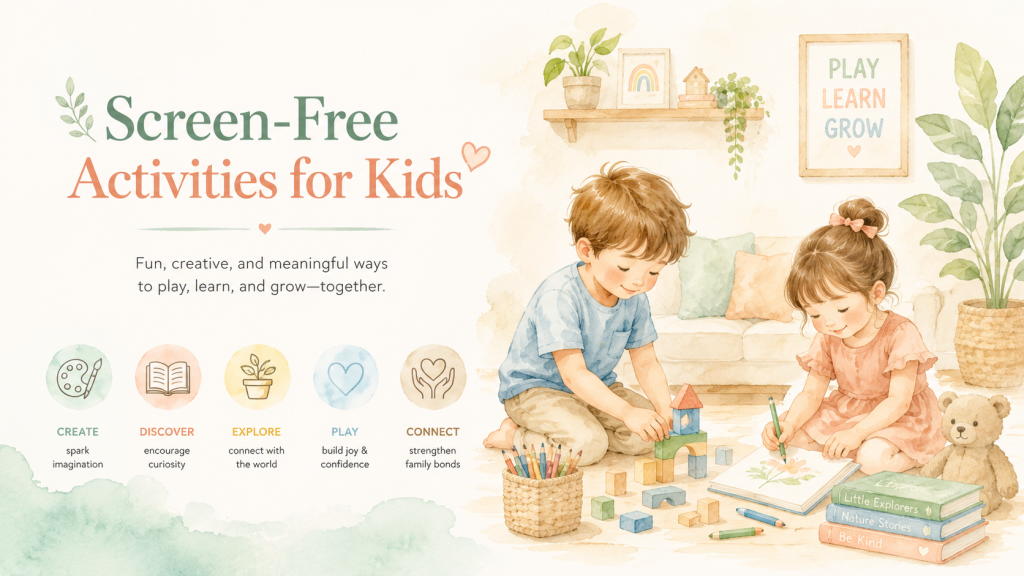
Screen-Free Activities for Kids

Why Fun Screen-Free Activities for Kids Are Important

Many parents worry about finding alternatives to tablets and television. However, fun screen-free activities for kids provide valuable opportunities for children to develop important skills while enjoying meaningful play.

Through activities without screens, children can practise:

  • Creativity
  • Problem-solving
  • Communication
  • Independence
  • Physical movement

The goal is not to remove technology completely, but to provide children with different ways to learn and explore.

Simple Screen-Free Activities for Kids at Home

Children naturally learn through play. These activities encourage curiosity while helping children develop important skills.

1. Arts and Crafts: Let Their Creativity Take Over

Arts and crafts are one of the easiest fun screen-free activities for kids because children can create, experiment, and express themselves freely.

From drawing and colouring to cutting, pasting, and creating simple projects, children get the chance to express their imagination while improving their fine motor skills.

The best part is that you do not need expensive supplies. Simple materials like paper, crayons, stickers, and recycled items can create hours of creative play.

Benefits:

  • Encourages creativity
  • Improves hand coordination
  • Builds confidence through self-expression

2. Reading Together: Building a Love for Stories

Reading together is one of the most meaningful screen-free activities for kids because it supports learning while creating a special bonding experience.

Beyond improving language skills, reading together creates a special bonding moment. Children enjoy listening to stories, asking questions, and exploring new ideas through books.

Even a short reading session before bedtime can become a meaningful daily routine.

Benefits:

  • Supports language development
  • Expands imagination
  • Strengthens parent-child connection

3. Sensory Play: Exploring Through Touch and Discovery

Sensory play is another example of fun screen-free activities for kids that encourages curiosity and hands-on learning.

Sensory play activities such as playing with water, sand, playdough, or textured materials allow children to discover different sensations while developing their thinking skills.

Simple activities like creating a sensory box or homemade playdough can provide plenty of entertainment.

Benefits:

  • Encourages exploration
  • Supports problem-solving skills
  • Develops sensory awareness

4. Building Blocks and Puzzles: Learning Through Play

Building toys and puzzles are great examples of play that feels like fun but supports development.

Children learn to experiment, solve problems, and think creatively as they build structures or complete puzzles.

These activities can also grow with your child as they become more challenging over time.

Benefits:

  • Develops logical thinking
  • Improves concentration
  • Encourages patience

5. Pretend Play: Creating Their Own Little World

Children have amazing imaginations. Pretend play is one of the best screen-free activities for kids because it allows children to create stories, explore emotions, and use their imagination.

Pretend play allows them to become chefs, doctors, teachers, superheroes, or anything they imagine. Simple household items can become tools for creative storytelling.

Joining your child in pretend play can also help you better understand their thoughts and emotions.

Benefits:

  • Encourages imagination
  • Develops communication skills
  • Supports emotional expression

6. Cooking or Baking Together

The kitchen can become a fun learning space for children.

Simple activities such as mixing ingredients, decorating cookies, or preparing snacks allow children to participate while learning practical skills.

Although it may take longer than doing it yourself, the learning experience makes it worthwhile.

Benefits:

  • Teaches independence
  • Introduces basic maths and science concepts

Creates family memories

7. Outdoor Exploration

Children need opportunities to move, explore, and experience the world outside.

Outdoor activities can be simple:

  • Going for a walk
  • Collecting leaves
  • Playing at the playground
  • Observing insects or nature

These experiences encourage curiosity and physical development.

Benefits:

  • Supports physical activity
  • Reduces energy buildup

Encourages discovery

8. Music and Dancing

Music is a fun way for children to express themselves.

Playing their favourite songs, singing together, or creating simple instruments from household items can turn an ordinary afternoon into a fun activity.

Benefits:

  • Encourages creativity
  • Supports rhythm and coordination

Builds confidence

9. Helping With Simple Household Tasks

Children often enjoy feeling involved and helpful.

Simple tasks such as:

  • Sorting laundry
  • Watering plants
  • Organizing toys
  • Helping prepare meals

10. Family Games and Quality Time

Board games, card games, and simple family challenges create opportunities for connection.

These moments are not just about keeping children busy — they are about creating memories together.

Benefits:

  • Strengthens family bonds
  • Teaches teamwork
  • Develops social skills

How to Encourage More Fun Screen-Free Activities for Kids

Introducing fun screen-free activities for kids does not need to be difficult. The key is creating simple routines where children have opportunities to play, explore, and use their imagination.

Create a Simple Activity Rotation

Instead of constantly searching for new ideas, prepare a few favourite activities and rotate them throughout the week.

Keep Activities Accessible

Children are more likely to play independently when materials are easy to find and age-appropriate.

Join Them Sometimes

While independent play is important, children also enjoy moments when parents participate and show interest.

Accept That Boredom Is Part of Learning

Children do not need constant entertainment.

Sometimes boredom encourages creativity as they learn to create their own games and activities.

Why Screen-Free Activities Matter for Child Development

Beyond reducing screen time, these activities support important areas of development:

  • Creativity and imagination
  • Communication skills
  • Problem-solving ability
  • Emotional development
  • Independence

The goal is not to eliminate screens completely, but to create a healthy balance where children have different ways to learn and explore.

Final Thoughts

Finding screen-free activities for kids does not mean creating a perfectly structured day without technology.

Sometimes the most meaningful moments come from simple things — reading a story together, creating something with their hands, exploring outdoors, or simply spending time as a family.

The goal is not to remove screens completely, but to give children more opportunities to discover, imagine, and connect with the world around them.

Written by SY
A mum sharing personal parenting experiences, discoveries, and everyday lessons.

Frequently Asked Questions

Some fun screen-free activities for kids include arts and crafts, reading, sensory play, puzzles, pretend play, outdoor exploration, cooking, and family games.

Parents can keep children entertained without screens by preparing simple activities, rotating toys, encouraging creativity, and joining children during playtime.

Easy screen-free activities for kids include sensory bins, colouring, building blocks, simple puzzles, music, dancing, and pretend play.

Screen-free activities help children develop creativity, communication skills, problem-solving abilities, and emotional skills while encouraging active learning.

Shop Our Picks

Shopee Affiliate Storefront