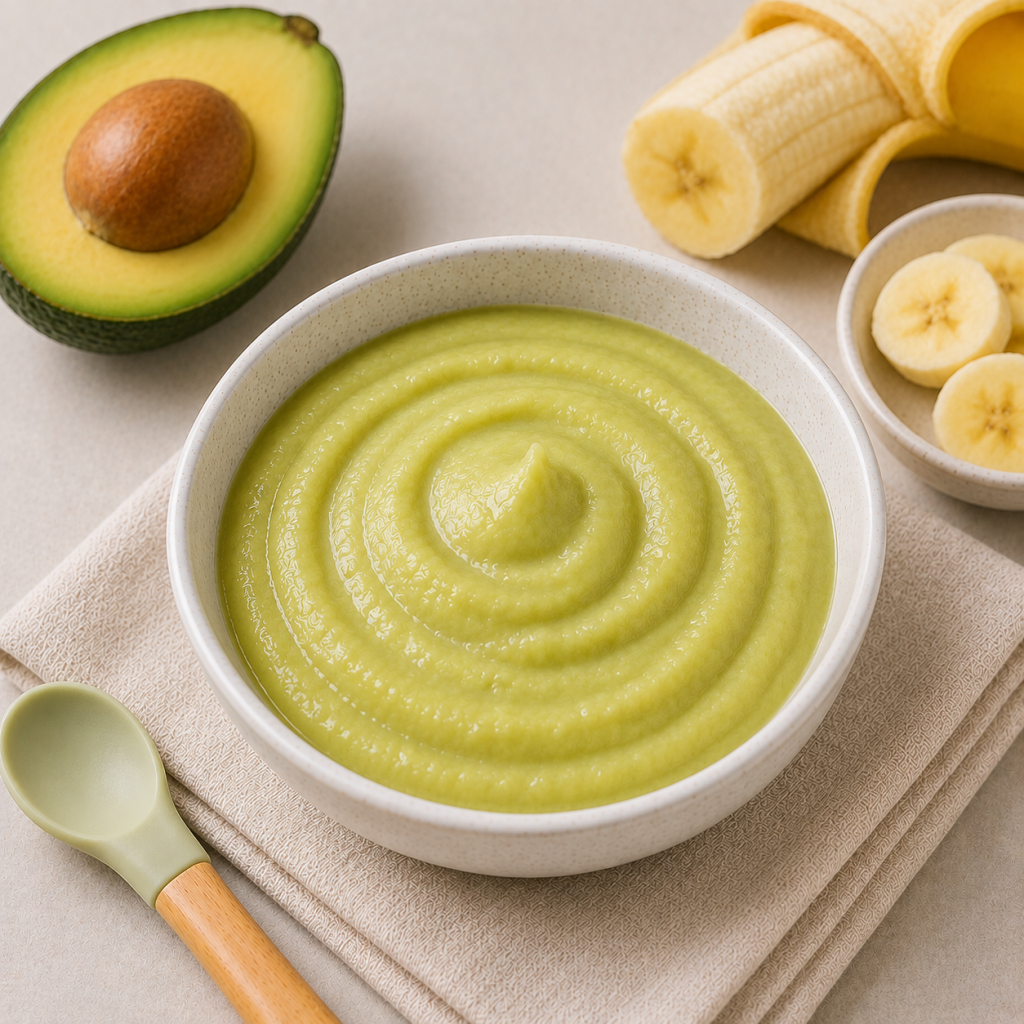
This easy avocado banana puree for baby is a creamy, naturally sweet baby food that takes only a few minutes to prepare. With no cooking required, ripe avocado and banana can simply be mashed or blended together into a smooth texture that’s easy to adjust as your baby progresses with solids.
This was one of those recipes I liked keeping for busy days because there was no steaming or cooking involved. If I had a ripe avocado and banana at home, I could prepare a fresh portion for my little one within minutes — simple, convenient and with very little washing up.
Suitable for: Around 6 months+ Prep Time: 5 minutes Cook Time: No cooking required Servings: 1–2 baby portions
Ingredients for Avocado Banana Puree
You only need two simple ingredients:
½ ripe avocado
½ ripe banana
1–2 tbsp warm water or baby’s usual milk, if needed
Avocado and banana both have naturally soft and creamy textures, making them an easy combination to mash or blend without any cooking.
How to Make Avocado Banana Puree for Baby
1. Prepare the Ingredients
Cut the avocado in half and remove the stone. Scoop the flesh out with a spoon.
Peel the banana and cut it into smaller pieces.
2. Mash or Blend
Place the avocado and banana into a clean bowl and mash thoroughly with a fork.
For a smoother consistency, transfer both ingredients into a baby food blender and blend until creamy.
3. Adjust the Texture
If the avocado banana puree for baby is too thick, add a small amount of warm water or your baby’s usual milk.
Add the liquid gradually until you reach your baby’s preferred consistency.
4. Serve Fresh
Transfer the puree into a clean baby bowl and serve immediately.
There’s no need to add sugar, honey or other sweeteners because ripe banana already provides plenty of natural sweetness.
I personally prefer making avocado banana puree fresh rather than preparing a large batch.
Both avocado and banana start turning brown after they’re cut and exposed to air. Since this recipe takes only a few minutes to prepare, I find it easier to make just enough for one meal.
It’s also one of my favourite options for days when I don’t have time to steam or cook anything.
No Baby Food Maker Needed for This One
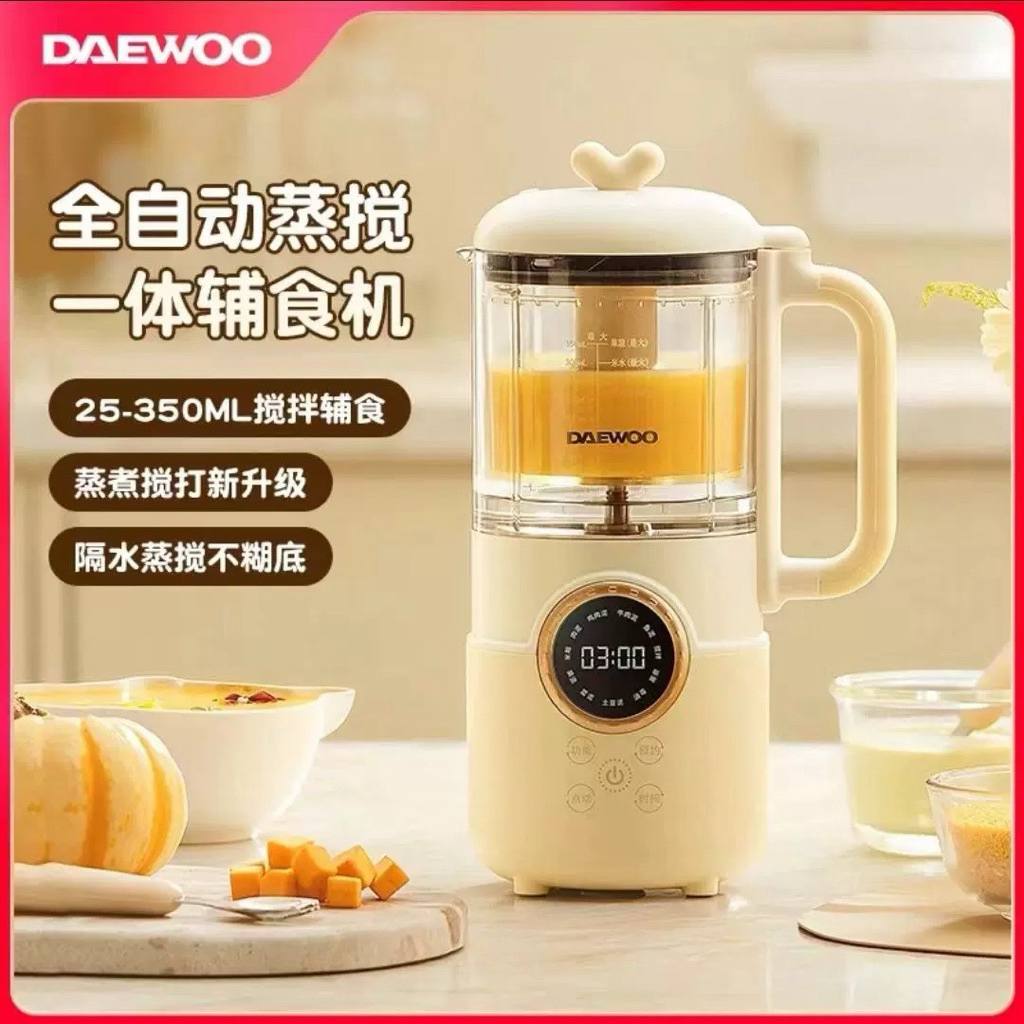
Unlike my pumpkin, potato or chicken puree recipes, this is one recipe where I usually don’t need to bring out my baby food maker.
A ripe avocado and banana are already soft enough to mash together with a fork. If I want an extra-smooth consistency, I simply use a small baby food blender.
For me, having a mix of cooked and no-cook baby food recipes makes meal preparation much more manageable during a busy week.
How to Choose Avocado and Banana for Baby Puree
For avocado, choose one that:
Is ripe and gives slightly when gently pressed
Has soft, creamy flesh
Has no mouldy or spoiled areas
Doesn’t have an unusual smell
For banana, choose one that:
Is ripe and naturally soft
Is easy to mash
Has no mouldy or spoiled areas
Has a naturally sweet flavour
Very firm avocado can be difficult to mash and may have a less creamy texture, so I prefer waiting until it is properly ripe.
What Texture Should Avocado Banana Puree Be?
For babies just starting solids: Mash thoroughly or blend until you have a smooth and creamy consistency. Add a little liquid if necessary.
As baby progresses: Mash with a fork instead of blending completely smooth, gradually introducing a thicker and slightly more textured consistency appropriate for your baby’s feeding abilities.
How to Store Avocado Banana Puree
Avocado and banana naturally oxidise and can turn brown quite quickly after being cut.
Because this recipe is so quick to make, I personally prefer preparing only the amount I need and serving it fresh rather than storing a large batch.
If you do have leftovers, place them promptly in a clean, airtight container in the refrigerator and follow appropriate food-storage guidance before serving again.
What Can I Mix With Avocado Banana Puree?
Once your baby has tried the individual ingredients, some easy combinations include:
Avocado + Banana + Apple
Avocado + Banana + Oats
Avocado + Banana + Sweet Potato
Avocado + Banana + Pear
Avocado + Banana + Plain Yoghurt
SHOP SY PICKS
These are the simple tools I use at home to make baby food prep quicker and easier. Nothing fancy, just a few practical essentials that make cooking, portioning and storing meals much more convenient.
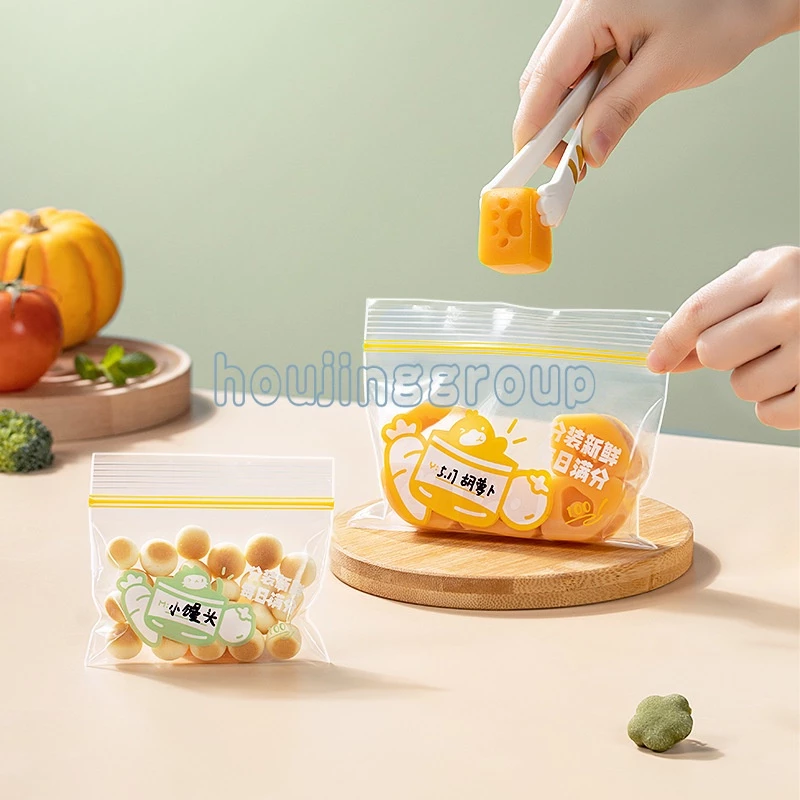
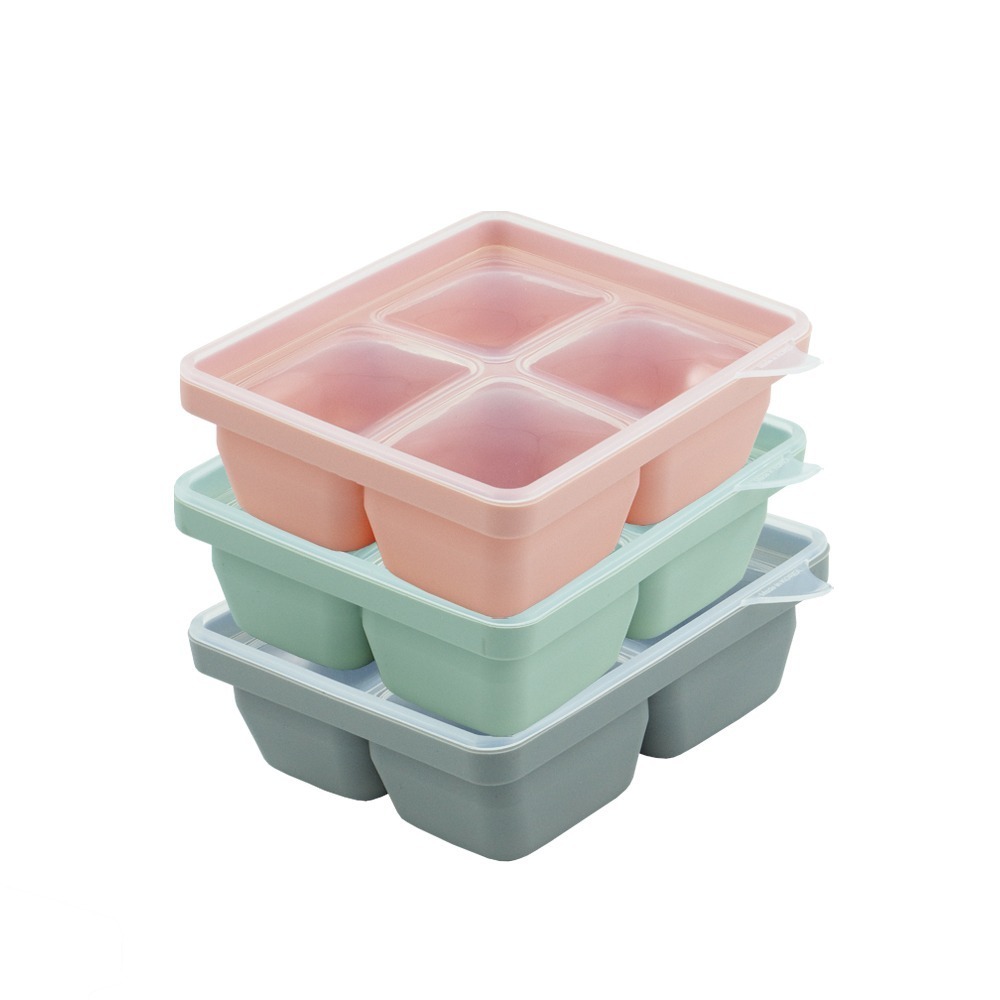
Perfect for freezing baby food portions. Makes storing homemade purees simple, organised and convenient for everyday meals.
Frequently Asked Questions
Avocado and banana can be offered once your baby is developmentally ready to start solids. Prepare them in a texture appropriate for your baby’s feeding stage.
No. Ripe avocado is naturally soft and can be mashed or blended without cooking.
No. A ripe banana is soft enough to mash or blend directly with avocado, making this a convenient no-cook baby food recipe.
Avocado and banana naturally oxidise after their flesh is exposed to air, which can cause the puree to gradually turn brown.
Yes. This is one of the easiest baby purees to make without a blender. Make sure both fruits are ripe, then mash them thoroughly with a fork until you reach the desired texture.
You can use a small amount of your baby’s usual milk to adjust the consistency if appropriate. Add it gradually so the puree doesn’t become too runny.
You can, but I personally prefer making it fresh. Avocado and banana both oxidise quickly, and since the recipe takes only a few minutes, preparing a fresh portion is usually quite manageable.
Once individual ingredients have been introduced, avocado can be combined with banana, apple, pear, sweet potato or other suitable foods to create different flavours and textures.
This article shares my personal experience and general information and should not replace individual medical or feeding advice. Babies develop at different rates. Speak with your child’s healthcare professional before starting solids if you have concerns about developmental readiness, growth, allergies or feeding.
About the author
SY is a mum of one and the founder of PicksBySY. Like many mums, she’s constantly learning, discovering and figuring things out as her little one grows. She created PicksBySY to share her real parenting experiences, useful finds and everyday discoveries – from baby milestones and toddler life to family activities and products she genuinely uses and loves.
More Recipes
Explore more easy baby food recipes for your little one.
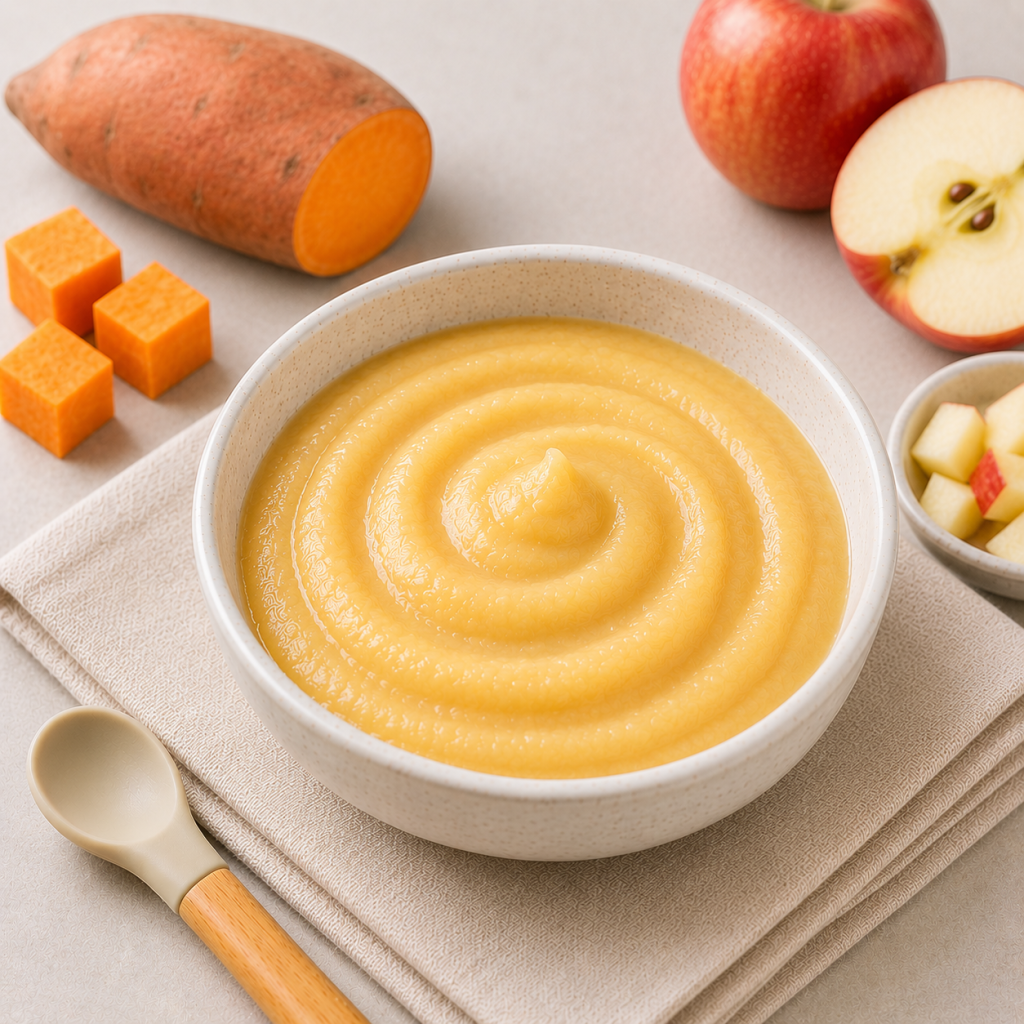
This easy sweet potato apple puree for baby is a naturally sweet and creamy baby food that requires only a few simple ingredients. Once steamed until soft, sweet potato and apple blend together into a smooth texture that’s easy to adjust as your baby progresses with solids.
Sweet potato and apple were two ingredients I often had at home, which made this combination really convenient when my little one started solids. I could simply peel, steam and blend them with a little warm water — an easy option when I wanted to add some variety without making the meal too complicated.
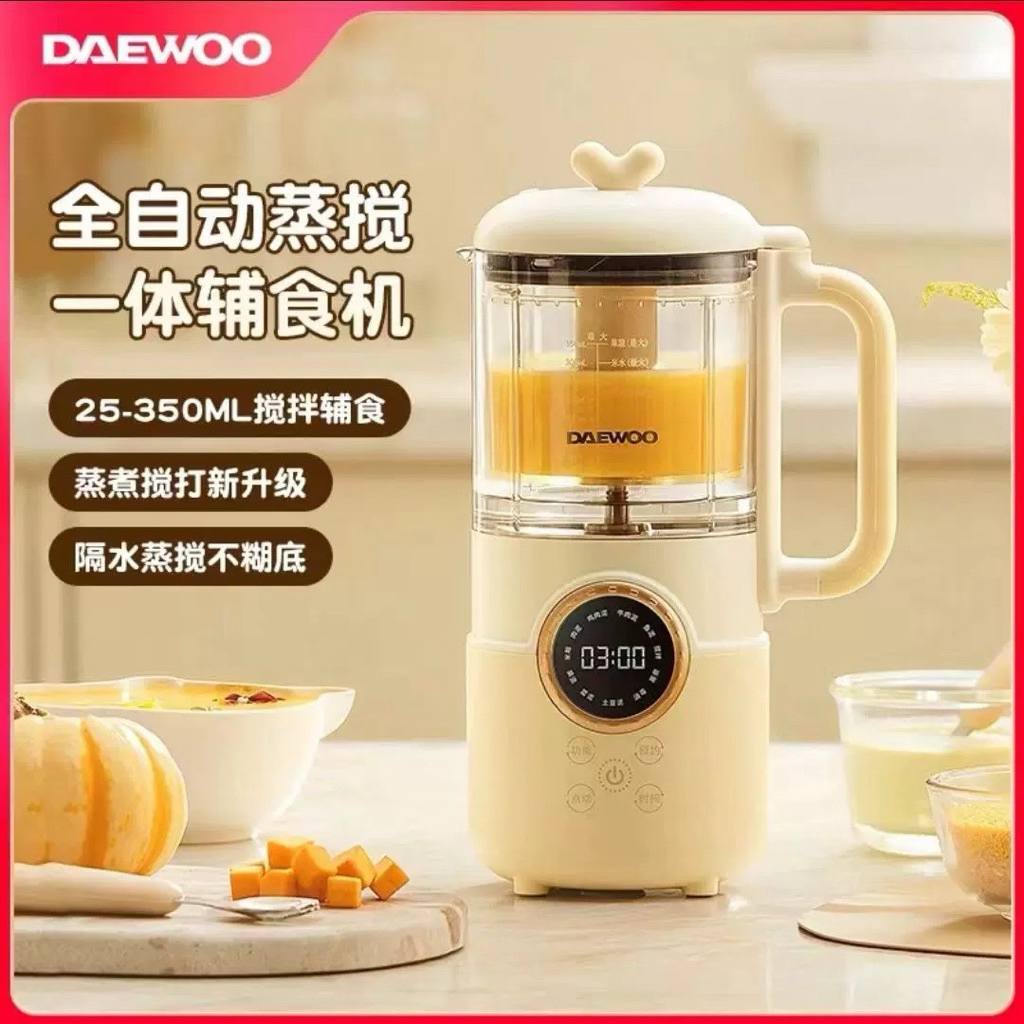
On busy days, I like anything that can reduce the number of steps and things I need to wash. A Daewoo Baby Food Maker can be especially convenient because it combines steaming and blending in one machine.
For this sweet potato apple puree, simply prepare and cut the ingredients into smaller pieces, place them into the food maker to steam until soft, then blend them directly in the same machine until you reach your baby’s preferred consistency.
Why I Like a 2-in-1 Baby Food Maker
Steam and blend in one machine – no need to use a separate steamer and blender.
Less washing up – especially helpful when preparing baby food regularly.
Easy for small portions – convenient when you only need one or two baby servings.
Adjustable texture – blend smoother for early solids or gradually leave more texture as your baby progresses.
Useful for meal prep – works for vegetables, fruits and other baby food combinations.
Mum Tip
I like this combination because both ingredients are naturally sweet, so there’s really no need to add anything else.
Sweet potato can make the puree quite thick, so I usually add the water little by little while blending until I get the texture I want.
How to Choose Sweet Potato and Apple for Baby Puree
For sweet potato, choose one that:
Feels firm
Has relatively smooth, fresh-looking skin
Has no soft or spoiled areas
For apple, choose one that:
Feels firm and fresh
Has no bruised or spoiled areas
Is ripe and naturally sweet
What Texture Should Sweet Potato Apple Puree Be?
For babies just starting solids: Blend thoroughly with enough warm water to create a smooth consistency.
As baby progresses: Use less water and gradually make the puree thicker.
How to Store Sweet Potato Apple Puree
Cool any portion you’re keeping promptly and transfer it into a clean, airtight container in the refrigerator.
I personally prefer preparing baby puree in smaller portions. If I make extra, I portion it before storing so I can easily take out only what I need for each meal.
What Can I Mix With Sweet Potato Apple Puree?
Some easy combinations include:
Sweet Potato + Apple + Carrot
Sweet Potato + Apple + Pumpkin
Sweet Potato + Apple + Banana
Sweet Potato + Apple + Oats
Sweet Potato + Apple + Avocado
SHOP SY PICKS
These are the simple tools I use at home to make baby food prep quicker and easier. Nothing fancy, just a few practical essentials that make cooking, portioning and storing meals much more convenient.
Perfect for freezing baby food portions. Makes storing homemade purees simple, organised and convenient for everyday meals.
Frequently Asked Questions
Sweet potato and apple can be introduced when your baby is developmentally ready to start solids, which is commonly around 6 months. Make sure the puree is prepared in a smooth, age-appropriate texture.
For this recipe, I prefer steaming the apple together with the sweet potato. It softens the apple and makes both ingredients easy to blend into a smooth puree.
No. Sweet potato and apple are naturally sweet, so there’s no need to add sugar, honey or other sweeteners.
Yes. If both ingredients are steamed until very soft, you can mash them thoroughly with a fork. Add a little warm water if needed to adjust the consistency.
Yes, you can portion the puree into clean, freezer-safe baby food containers or silicone trays. I find portioning it before freezing especially convenient because I can take out only what I need for each meal.
Sweet potato naturally creates a thick, creamy puree. Simply add warm water a little at a time while blending until you reach your baby’s preferred consistency.
Once your baby has tried the individual ingredients, you can experiment with combinations such as carrot, pumpkin, banana, avocado or oats to create different flavours and textures.
This article shares my personal experience and general information and should not replace individual medical or feeding advice. Babies develop at different rates. Speak with your child’s healthcare professional before starting solids if you have concerns about developmental readiness, growth, allergies or feeding.
About the author
SY is a mum of one and the founder of PicksBySY. Like many mums, she’s constantly learning, discovering and figuring things out as her little one grows. She created PicksBySY to share her real parenting experiences, useful finds and everyday discoveries – from baby milestones and toddler life to family activities and products she genuinely uses and loves.
More Recipes
Explore more easy baby food recipes for your little one.
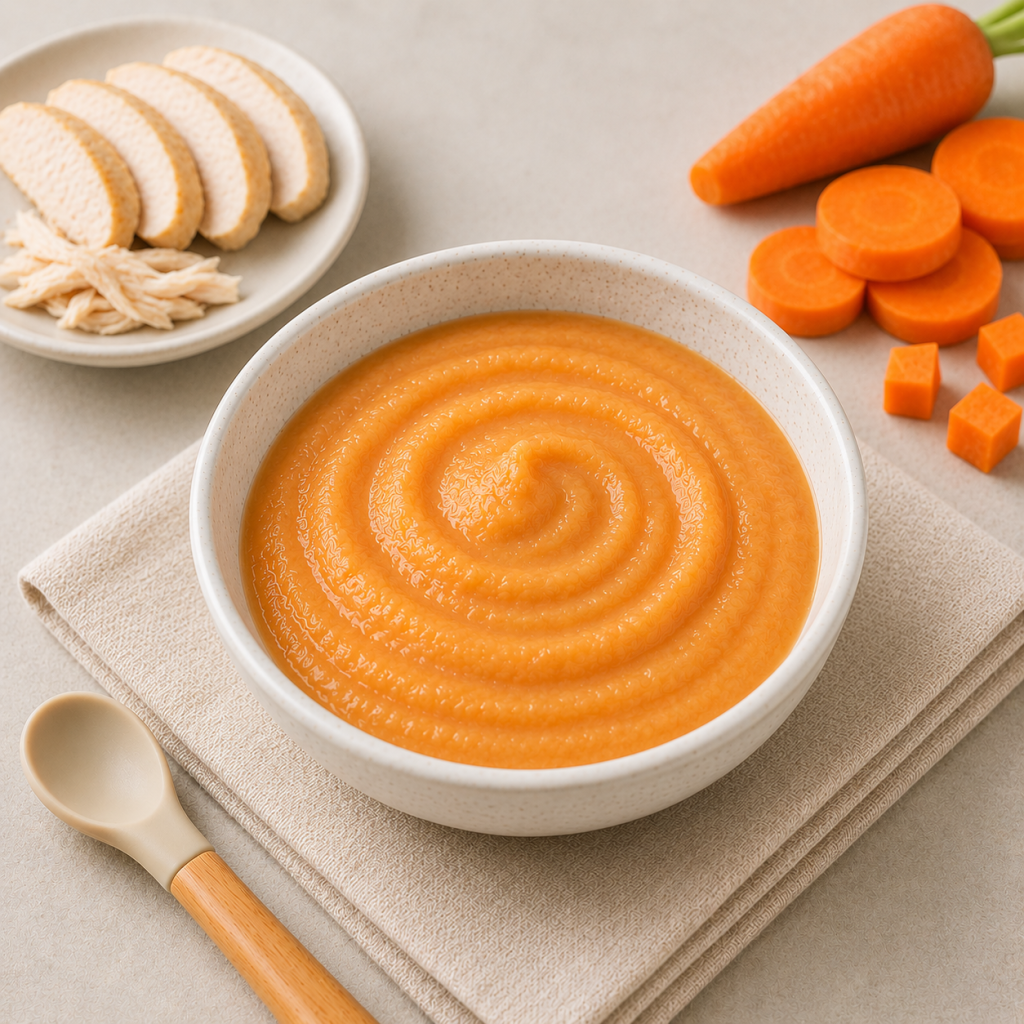
This easy chicken carrot puree for baby combines tender chicken with naturally sweet carrot to create a smooth and simple homemade baby meal. It’s an easy savoury combination for introducing different flavours and ingredients as your baby progresses with solids.
When I started adding meat into my little one’s meals, I liked pairing it with vegetables she was already familiar with. Carrot was an easy choice because its natural sweetness worked really well with chicken, and both ingredients could be steamed together to keep preparation simple.
Chicken and carrot make a simple savoury combination, with carrot adding a little natural sweetness to the meal.
How to Make Chicken Carrot Puree for Baby
1. Prepare the Ingredients
Peel and wash the carrot before cutting it into small pieces.
Cut the chicken into small pieces and make sure there are no bones.
2. Steam Until Fully Cooked
Steam the chicken and carrot for around 15–20 minutes, or until the carrot is completely soft and the chicken is thoroughly cooked through.
3. Blend Until Smooth
Transfer the cooked chicken and carrot into a baby food blender.
Add warm water gradually and blend until you reach your baby’s preferred consistency.
4. Serve Warm
Transfer the chicken carrot puree for baby into a clean baby bowl and allow it to cool before serving.
There’s no need to add salt or other seasoning.
Mum Tip
When I started introducing meat, I found it easier to pair it with vegetables my little one had already tried.
Carrot worked especially well because it added a little natural sweetness to the chicken without needing any extra seasoning.
How to Choose Chicken and Carrot for Baby Puree
For chicken, choose:
Fresh boneless chicken
Chicken that has been properly refrigerated
Meat with no unusual smell or appearance
For carrot, choose one that:
Feels firm
Looks fresh
Has no soft or spoiled areas
What Texture Should Chicken Carrot Puree Be?
For babies just starting solids: Blend thoroughly with enough warm water to create a smooth consistency.
As baby progresses: Use less water and gradually make the puree thicker.
How to Store Chicken Carrot Puree
Because this recipe contains cooked chicken, cool any portion you’re keeping promptly and transfer it into a clean, airtight container in the refrigerator.
I personally prefer making meat-based baby meals in smaller portions so I only prepare what I actually need.
What Can I Mix With Chicken Carrot Puree?
Some easy combinations include:
Chicken + Carrot + Potato
Chicken + Carrot + Pumpkin
Chicken + Carrot + Broccoli
Chicken + Carrot + Rice
Chicken + Carrot + Sweet Potato
SHOP SY PICKS
These are the simple tools I use at home to make baby food prep quicker and easier. Nothing fancy, just a few practical essentials that make cooking, portioning and storing meals much more convenient.
Perfect for freezing baby food portions. Makes storing homemade purees simple, organised and convenient for everyday meals.
Frequently Asked Questions
Chicken and carrot can be prepared together in an age-appropriate texture once your baby is ready for solids. Make sure the chicken is thoroughly cooked and the carrot is completely soft.
Boneless, skinless chicken breast or thigh can both be used.
Chicken can be more difficult to blend than vegetables. Combining it with soft carrot and gradually adding warm water helps create a smoother consistency.
No. There’s no need to add salt to chicken carrot puree for baby.
Yes. As your baby progresses with textures, cooked chicken and carrot can also be combined with soft rice or porridge.
Potato, pumpkin, broccoli, sweet potato and rice are easy ingredients to explore alongside chicken and carrot.
This article shares my personal experience and general information and should not replace individual medical or feeding advice. Babies develop at different rates. Speak with your child’s healthcare professional before starting solids if you have concerns about developmental readiness, growth, allergies or feeding.
About the author
SY is a mum of one and the founder of PicksBySY. Like many mums, she’s constantly learning, discovering and figuring things out as her little one grows. She created PicksBySY to share her real parenting experiences, useful finds and everyday discoveries – from baby milestones and toddler life to family activities and products she genuinely uses and loves.
More Recipes
Explore more easy baby food recipes for your little one.
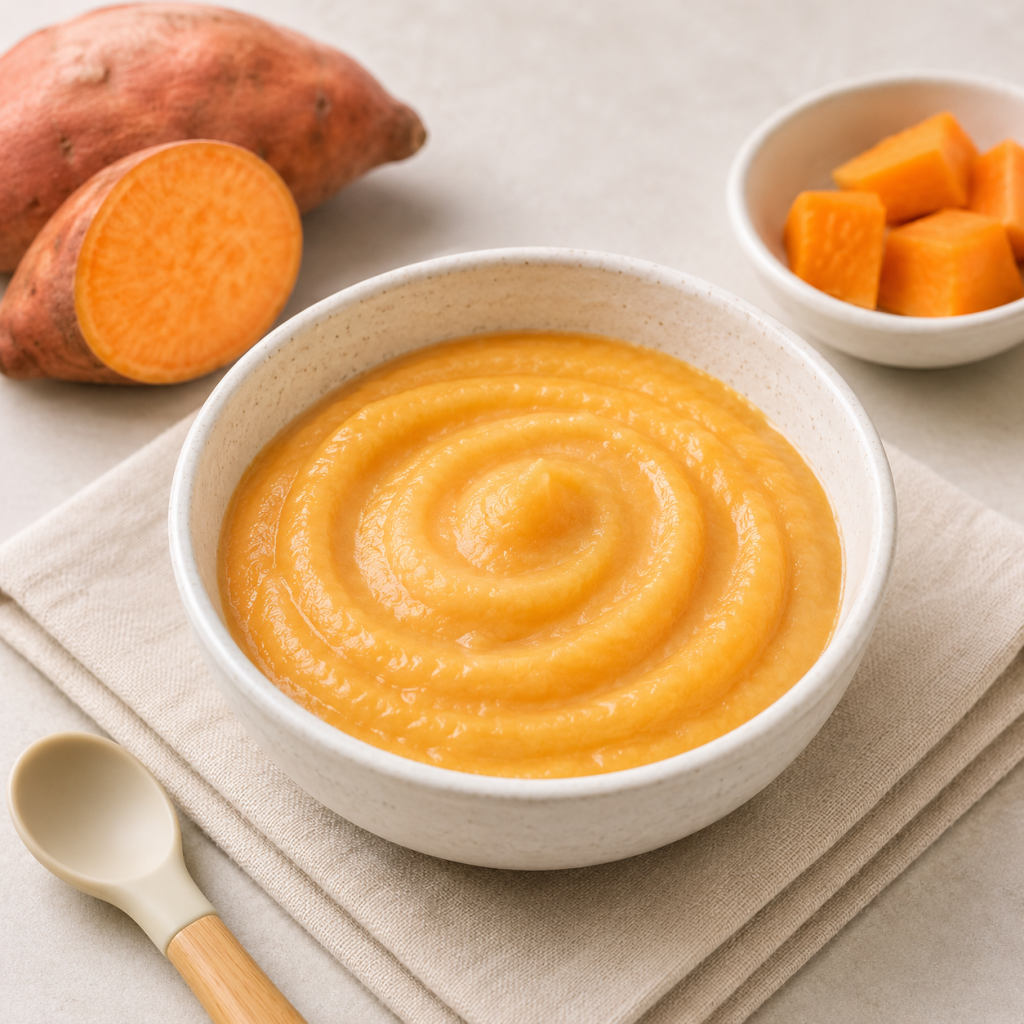
This easy sweet potato puree for baby is naturally sweet, soft and creamy, making it a simple first food to prepare when starting solids. With just sweet potato and a little warm water, you can make a smooth homemade baby puree without complicated preparation.
Sweet potato quickly became one of my favourite ingredients when my little one started solids. Once steamed, it was already so soft and creamy that blending took hardly any effort. I also loved that its natural sweetness meant there was no need to add sugar or other sweeteners.
Sweet potato was one of my favourite ingredients for meal prep because it becomes naturally creamy after steaming.
I usually start with very little water when blending because it’s always easier to add more if the puree is too thick.
How to Choose a Sweet Potato for Baby Puree
Look for a sweet potato that:
Feels firm
Has relatively smooth skin
Has no soft or wet spots
Has no signs of mould
Has no major cuts or damaged areas
What Texture Should Sweet Potato Puree Be?
For babies just starting solids: Blend thoroughly with a little warm water until smooth and easy to spoon.
As baby progresses: Use less water and gradually leave the sweet potato thicker or lightly mashed.
How to Store Sweet Potato Puree
Allow the puree to cool before transferring it into a clean, airtight food container and refrigerating it promptly.
If you’re preparing several portions, divide them into individual containers so you can take out only what you need for each meal.
What Can I Mix With Sweet Potato Puree?
Some easy combinations include:
Sweet Potato + Apple
Sweet Potato + Carrot
Sweet Potato + Pumpkin
Sweet Potato + Chicken
Sweet Potato + Avocado
Sweet Potato + Salmon
SHOP SY PICKS
These are the simple tools I use at home to make baby food prep quicker and easier. Nothing fancy, just a few practical essentials that make cooking, portioning and storing meals much more convenient.
Perfect for freezing baby food portions. Makes storing homemade purees simple, organised and convenient for everyday meals.
Frequently Asked Questions
Sweet potato can be prepared as a soft puree for babies who are developmentally ready to start solids, usually around 6 months.
Both methods can work, but I personally prefer steaming. The sweet potato becomes beautifully soft without getting too watery.
No. Sweet potato already has a naturally sweet flavour, so there’s no need to add sugar or other sweeteners.
Add warm water one tablespoon at a time while blending until you reach your baby’s preferred consistency.
Yes. You can prepare a small batch ahead of time, cool it promptly and store it appropriately in a clean, airtight container.
This article shares my personal experience and general information and should not replace individual medical or feeding advice. Babies develop at different rates. Speak with your child’s healthcare professional before starting solids if you have concerns about developmental readiness, growth, allergies or feeding.
About the author
SY is a mum of one and the founder of PicksBySY. Like many mums, she’s constantly learning, discovering and figuring things out as her little one grows. She created PicksBySY to share her real parenting experiences, useful finds and everyday discoveries – from baby milestones and toddler life to family activities and products she genuinely uses and loves.
More Recipes
Explore more easy baby food recipes for your little one.
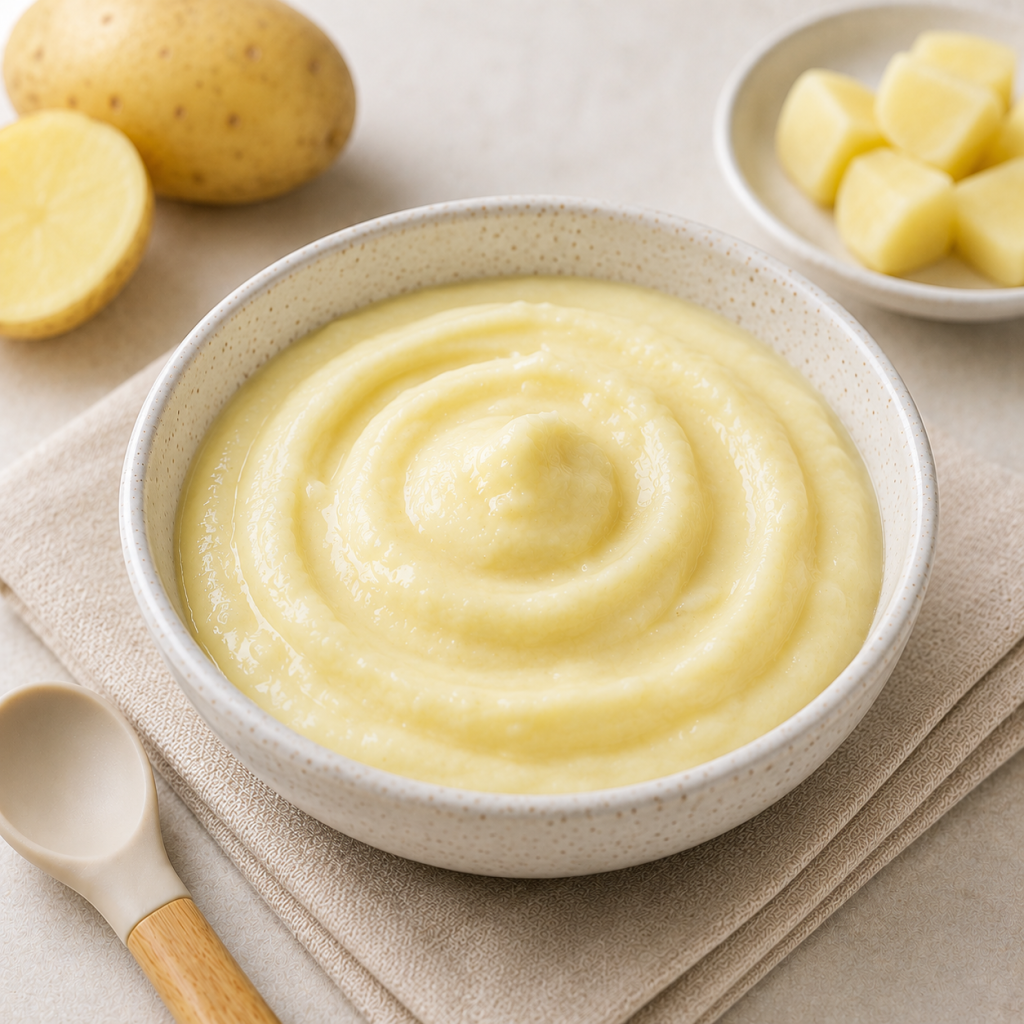
This easy potato puree for baby is a simple and creamy first food that requires only a few basic ingredients. Once cooked until soft, potato can be blended into a smooth texture that’s easy to adjust as your baby progresses with solids.
Potato was one of those ingredients I almost always had at home, which made it really convenient when my little one started solids. I could simply peel, steam and blend it with a little warm water — an easy option when I wanted to prepare something without too much fuss.
Choose a fresh potato that feels firm and has no green patches or sprouts. Potato becomes naturally soft and creamy when cooked, making it easy to prepare as a simple potato puree for baby.
How to Make Potato Puree for Baby
1. Prepare the Potato
Peel the potato and wash it thoroughly. Cut it into small, evenly sized cubes so that it cooks more quickly and evenly.
2. Cook Until Soft
Steam or boil the potato for around 10–15 minutes, or until it is completely soft and can be easily pierced with a fork.
3. Blend Until Smooth
Transfer the cooked potato into a baby food blender or processor.
Add warm water one tablespoon at a time and blend until smooth.
For babies who are just starting solids, make the potato puree smoother and thinner. As your baby progresses with textures, gradually use less water for a thicker consistency.
4. Serve Warm
Transfer the potato puree for baby into a clean baby bowl. Allow it to cool to a safe temperature before serving.
Potato was one of those ingredients I always had at home, so it was an easy option whenever I needed to prepare something simple for my baby.
One thing I noticed is that potato can become quite thick after blending. I normally add the water little by little rather than all at once so I can control the consistency better.
How to Choose a Potato for Baby Puree
Choose a fresh potato that:
Feels firm
Has smooth, healthy-looking skin
Has no green patches
Has no sprouts
Has no soft or rotten areas
What Texture Should Potato Puree Be?
You can adjust the consistency depending on your baby’s stage.
For babies just starting solids: Blend until smooth, adding warm water gradually to create a thinner consistency.
As baby progresses: Use less water and mash the potato instead of blending completely smooth to introduce more texture.
How to Store Potato Puree
Potato puree can be prepared ahead and stored in a clean, airtight food container in the refrigerator.
I personally prefer making smaller portions whenever possible because freshly prepared potato tends to have a nicer texture.
What Can I Mix With Potato Puree?
Once your baby has already tried the individual ingredients, potato can be combined with other baby-friendly foods.
Some easy combinations to try include:
Potato + Carrot
Potato + Pumpkin
Potato + Broccoli
Potato + Chicken
Potato + Salmon
Potato + Spinach
SHOP SY PICKS
These are the simple tools I use at home to make baby food prep quicker and easier. Nothing fancy, just a few practical essentials that make cooking, portioning and storing meals much more convenient.
Perfect for freezing baby food portions. Makes storing homemade purees simple, organised and convenient for everyday meals.
Frequently Asked Questions
Potato can be prepared in a soft, age-appropriate texture for babies who are developmentally ready to start solids, usually around 6 months. Make sure the potato is thoroughly cooked until soft before blending or mashing.
I prefer peeling the potato when making potato puree for baby, especially during the early stages of solids. This also helps create a smoother consistency.
You can use a little breast milk or your baby’s usual prepared formula to adjust the consistency if appropriate. Warm water also works perfectly well.
Potato contains starch and can become sticky or gummy when over-blended. Try blending only until smooth or mash the cooked potato with a fork instead.
Potato puree can be portioned into suitable freezer-safe baby food containers, although its texture may change after freezing and reheating. I personally prefer making smaller fresh batches.
Potato pairs well with carrot, pumpkin, broccoli, spinach, chicken and salmon.
About the author
SY is a mum of one and the founder of PicksBySY. Like many mums, she’s constantly learning, discovering and figuring things out as her little one grows. She created PicksBySY to share her real parenting experiences, useful finds and everyday discoveries – from baby milestones and toddler life to family activities and products she genuinely uses and loves.
More Recipes
Explore more easy baby food recipes for your little one.
Baby first foods were something I researched a lot before my little one reached the starting-solids stage.
I was excited for her to finally discover real food, but at the same time, I had so many questions.
What should I introduce first?
How much should she eat?
How quickly should I introduce another food?
And most importantly for me – how would I know which food caused a reaction if I introduced too many new ingredients at once?
When I started introducing baby first foods, I decided to keep things very simple.
Instead of introducing a completely different food every day, I preferred offering one new food for around three days before introducing another.
For me, this wasn’t about preventing food allergies. It was simply an approach that made me feel more comfortable because I could keep track of exactly what my baby had recently eaten.
If I noticed a possible reaction after introducing something new, there would be fewer new ingredients to consider.
So if you’re preparing to start solids too, here’s how I approached my baby’s first foods at 6 months, including a simple 7-day menu and what I learned along the way.
This is my personal experience rather than a feeding rule for every baby. Recommendations for introducing foods, particularly common allergens, can vary depending on your baby’s individual circumstances. Speak with your child’s healthcare professional if you have concerns about starting solids or food allergies.
Baby First Foods: Is Your Baby Ready to Start?
Before thinking about which baby first foods to prepare, I think there’s an even more important question:
Is your baby developmentally ready for solids?
Many babies begin complementary foods at around 6 months, but I didn’t want to look at age alone.
I also looked for signs of readiness such as:
Good head and neck control
Being able to sit with appropriate support
Showing interest when other people eat
Opening their mouth when food is offered
Bringing things towards their mouth
Being able to swallow food rather than automatically pushing everything back out
If you’re currently at this stage, I’ve also shared 10 Signs Baby Is Ready for Solid Foods (Don’t Start Too Early!).
Why I Introduced Baby First Foods One at a Time
When we first started solids, I didn’t immediately create complicated baby meals.
I kept our baby first foods very simple.
One new food at a time.
Then I offered the same food for around three days before introducing another new ingredient.
My thinking was simple.
If I introduced avocado on Monday, pumpkin on Tuesday and another completely new food on Wednesday, then noticed a possible reaction, I might be left wondering which new food was responsible.
Introducing foods individually made it easier for me to remember exactly what my baby had recently eaten.
It also gave her more than one opportunity to experience the same flavour and texture.
And I quickly learned that the first reaction to a food doesn’t necessarily tell you whether your baby will eventually enjoy it.
Sometimes the first spoonful was met with a facial expression that basically said:
“Mummy…what have you just put in my mouth?” 😂
And then she’d happily eat the same food another day.
My 7-Day Baby First Foods Menu
Here’s an example of how I approached the first seven days.
Day
Baby First Food
My Approach
Day 1
Avocado
First introduction
Day 2
Avocado
Offer again
Day 3
Avocado
Offer again
Day 4
Sweet Potato
First introduction
Day 5
Sweet Potato
Offer again
Day 6
Sweet Potato
Offer again
Day 7
Broccoli
Begin introducing the next food
This isn’t meant to be the exact menu every baby needs to follow.
You could choose other developmentally appropriate baby first foods.
The important part of my personal approach was simply:
Introduce → observe → offer again → then move on.
Days 1–3: Avocado as a Baby First Food
Avocado is one simple option when introducing baby first foods because it’s naturally soft and requires very little preparation.
I chose a ripe avocado and mashed it until it reached a texture suitable for my baby’s stage.
During these first few days, I wasn’t focused on how much she managed to eat.
I was paying attention to the whole experience.
How did she respond to the texture?
Was she comfortable after eating?
Did I notice anything unusual?
And…
Did any of the avocado actually stay inside her mouth? 😂
I learned very quickly that starting solids isn’t about finishing a bowl.
It’s about learning how to eat.
Days 4–6: Sweet Potato
After introducing the first food without concerns, I moved on to another simple ingredient.
Sweet potato is another easy option for baby first foods because it becomes very soft when steamed and is easy to mash.
I steamed it until completely soft and prepared it in a texture appropriate for my baby.
Again, I kept it simple.
No complicated recipes.
No need for five ingredients.
At this stage, sweet potato itself was already a completely new experience.
Mum Tip: Start With Small Portions
One thing I learned quickly was not to prepare huge portions.
When babies first start solids, they may eat very little.
I’d spend time preparing everything…
and she’d have a few tiny spoonfuls and decide she was done. 😂
Preparing smaller portions made much more sense for us.
Day 7: Introducing Another Baby First Food
By Day 7, I was ready to start introducing another new food.
For example, broccoli.
I would steam it until very soft and prepare it appropriately for my baby’s feeding abilities.
Then I could continue the same approach:
Day 7 – Broccoli
Day 8 – Broccoli
Day 9 – Broccoli
And then gradually introduce another food.
More Baby First Foods I Introduced
As my baby became more comfortable with solids, I gradually expanded the variety of foods she experienced.
Some baby first foods parents may consider, prepared appropriately for their baby’s developmental stage, include:
Avocado
Sweet potato
Broccoli
Pumpkin
Banana
Carrot
Pear
Apple
Oats
Egg
Fish
Chicken
Tofu
Iron-fortified infant cereal
I wouldn’t necessarily follow this exact order.
The appropriate foods and preparation can depend on your baby’s development, your family diet and individual feeding guidance.
I also wouldn’t unnecessarily delay common allergenic foods simply because I preferred introducing foods individually.
If you’re unsure about introducing foods such as egg, peanut, fish or other common allergens — particularly if your baby has severe eczema, an existing food allergy or other risk factors — speak with your child’s healthcare professional.
When I Started Combining Baby First Foods
Once my baby had already experienced several individual foods, meal preparation became much more interesting.
I gradually started combining familiar ingredients.
For example:
Avocado + banana
Pumpkin + porridge
Sweet potato + chicken
Broccoli + potato
Oats + fruit
Instead of introducing several completely unfamiliar ingredients in one meal, I could combine foods she’d previously experienced.
As her list of familiar foods grew, so did the number of meals I could prepare.
If your baby is already at this stage, I’ve also shared 5 Easy Baby Solid Food Recipes for Babies 6 Months+ for more meal inspiration.
What I Learned From Introducing Baby First Foods
The biggest lesson I learned was that starting solids didn’t need to be complicated.
Social media can make it look like a six-month-old needs a perfectly arranged plate containing five different foods at every meal.
That wasn’t how we started.
Sometimes the entire meal was simply:
Sweet potato.
And that was okay.
My baby was learning about food.
I was learning how to feed her.
And gradually, our meals naturally became more varied.
For me, introducing baby first foods was less about creating impressive meals and more about taking things gradually, observing my baby and helping her become comfortable with eating.
Frequently Asked Questions About Baby First Foods
What Are the Best Baby First Foods for 6 Months?
There isn’t one perfect first food for every baby.
Parents can introduce a variety of developmentally appropriate foods, including vegetables, fruits, iron-rich foods and protein sources.
Some simple baby first foods can include avocado, sweet potato, broccoli, pumpkin and iron-fortified infant cereal.
Do I Need to Wait Three Days Between Baby First Foods?
Not necessarily.
Offering the same food for around three days was the approach I personally preferred because it made it easier for me to keep track of what my baby had recently eaten.
It shouldn’t be interpreted as a rule that every parent must follow or as a way of preventing food allergies.
Why Introduce Baby First Foods One at a Time?
For me, introducing foods individually made tracking new ingredients easier.
If I noticed something unusual after introducing a new food, there were fewer recently introduced ingredients to consider.
It also gave my baby several opportunities to experience the same flavour and texture.
How Much Baby First Food Should a 6-Month-Old Eat?
Every baby’s appetite is different.
When we started solids, I focused less on making my baby finish a particular amount and more on giving her opportunities to experience food while watching her hunger and fullness cues.
If you have concerns about how much your baby eats or their growth, speak with your child’s healthcare professional.
Can I Mix Baby First Foods Together?
I personally started with individual foods.
Once my baby had already experienced several ingredients separately, I gradually began combining familiar foods into simple meals.
This gave us many more options as her feeding journey progressed.
What If My Baby Refuses Their First Foods?
I wouldn’t immediately assume your baby dislikes the food forever.
New tastes and textures can take time to become familiar.
If my baby wasn’t interested in something, I didn’t force her to finish it. I could simply offer it again another time.
Should My Baby Still Drink Milk After Starting First Foods?
Yes. Breast milk or infant formula continues to be an important part of a baby’s diet during the first year while complementary foods are gradually introduced.
Starting solids is a gradual transition rather than an immediate replacement of milk feeds.
Final Thoughts on Baby First Foods From One Mum to Another
When I first started researching baby first foods, I thought I needed a complicated meal plan.
I didn’t.
Keeping things simple actually made the experience much less overwhelming for me.
One food.
A few days.
Observe.
Then introduce another.
As my baby experienced more foods, our meals naturally became more varied.
Eventually, those simple mashed first foods turned into proper little meals.
And somewhere along the way, I went from wondering:
“What can she even eat?”
to:
“How did half of your dinner get onto the floor?” 😂
If you’re just beginning your baby’s first-food journey, don’t feel pressured to create perfect meals from Day 1.
Take your time, follow your baby’s developmental readiness and gradually introduce them to the huge new world of food.
It’s a learning experience for both baby and parent.
Written by SY A mum sharing personal parenting experiences, discoveries and everyday lessons.
This article shares my personal experience and general information and isn’t a substitute for individual medical or feeding advice. Speak with your child’s healthcare professional if you have concerns about starting solids, growth, feeding or food allergies.
Frequently Asked Questions About Baby First Foods
Once your baby is developmentally ready for solids, you can gradually introduce a variety of appropriately prepared foods. Examples include soft vegetables, fruits, iron-fortified infant cereal, well-cooked egg and other iron-rich and protein-rich foods. The appropriate preparation will depend on your baby’s developmental abilities and whether you’re spoon-feeding, using a baby-led approach or combining methods.
When first starting solids, babies may begin with small amounts of food and gradually progress to more regular meals. I personally found it easier to follow my baby’s appetite and slowly build a routine rather than worrying about immediately serving three meals every day. If you’re unsure about the amount or frequency that’s appropriate for your baby, discuss it with your child’s healthcare professional.
Breast milk or infant formula continues to be important during the first year. How you time milk and solid meals can depend on your baby’s age, routine and appetite. When starting solids, the goal isn’t to suddenly replace milk feeds with large solid meals.
here isn’t one perfect first food. Some simple options include avocado, sweet potato, pumpkin, broccoli, banana, well-cooked egg and iron-fortified infant cereal. I liked beginning with simple foods before gradually introducing more combinations.
Introducing foods individually can make it easier to observe how your baby responds, particularly when introducing common allergens.
However, parents don’t necessarily need to follow an overly restrictive diet or delay introducing variety without a medical reason.
Speak with your baby’s healthcare professional if you’re concerned about allergies.
Egg can generally be introduced once a baby is developmentally ready for solid foods, provided it is fully cooked and prepared appropriately.
Because egg is a common allergen, introduce it carefully and seek professional guidance if your baby has existing allergies, severe eczema or other allergy risk factors.
Small amounts of water can generally be introduced around the time babies begin eating complementary foods.
Breast milk or infant formula should still remain their primary milk drink during the first year.
Try not to panic.
Some babies need time to become comfortable with new tastes and textures.
From my experience, there were foods my baby seemed completely uninterested in initially but became more willing to eat later.
I try not to force her to finish food and instead offer different foods again on another day.
Some important considerations include avoiding honey before 12 months, limiting foods high in added salt or sugar, avoiding unpasteurised foods and preparing potential choking hazards safely.
Food-safety recommendations can vary by food and individual circumstances, so use reliable infant-feeding guidance or speak with your child’s healthcare professional if you’re unsure.
Final Thoughts From One Mum to Another
Starting solids can feel like another parenting topic where there are a million rules and opinions online.
Purees.
Baby-led weaning.
Meal schedules.
Food combinations.
Portion sizes.
It can become overwhelming very quickly.
What helped me was keeping the beginning simple.
One meal doesn’t need ten ingredients.
Your baby doesn’t need to finish everything you prepare.
And your baby’s first week of solids doesn’t need to look like someone’s perfectly arranged Instagram plate.
You’re introducing your little one to an entirely new world of food.
Let them explore.
Let them make a mess.
Take plenty of photos of those first-food faces. 😂
And gradually, one tiny bite at a time, eating becomes another skill they learn.
This article shares my personal experience and general information and should not replace individual medical or feeding advice. Babies develop at different rates. Speak with your child’s healthcare professional before starting solids if you have concerns about developmental readiness, growth, allergies or feeding.
About the author
SY is a mum of one and the founder of PicksBySY. Like many mums, she’s constantly learning, discovering and figuring things out as her little one grows. She created PicksBySY to share her real parenting experiences, useful finds and everyday discoveries – from baby milestones and toddler life to family activities and products she genuinely uses and loves.
Related Articles
Continue supporting your baby’s development with these helpful guides: