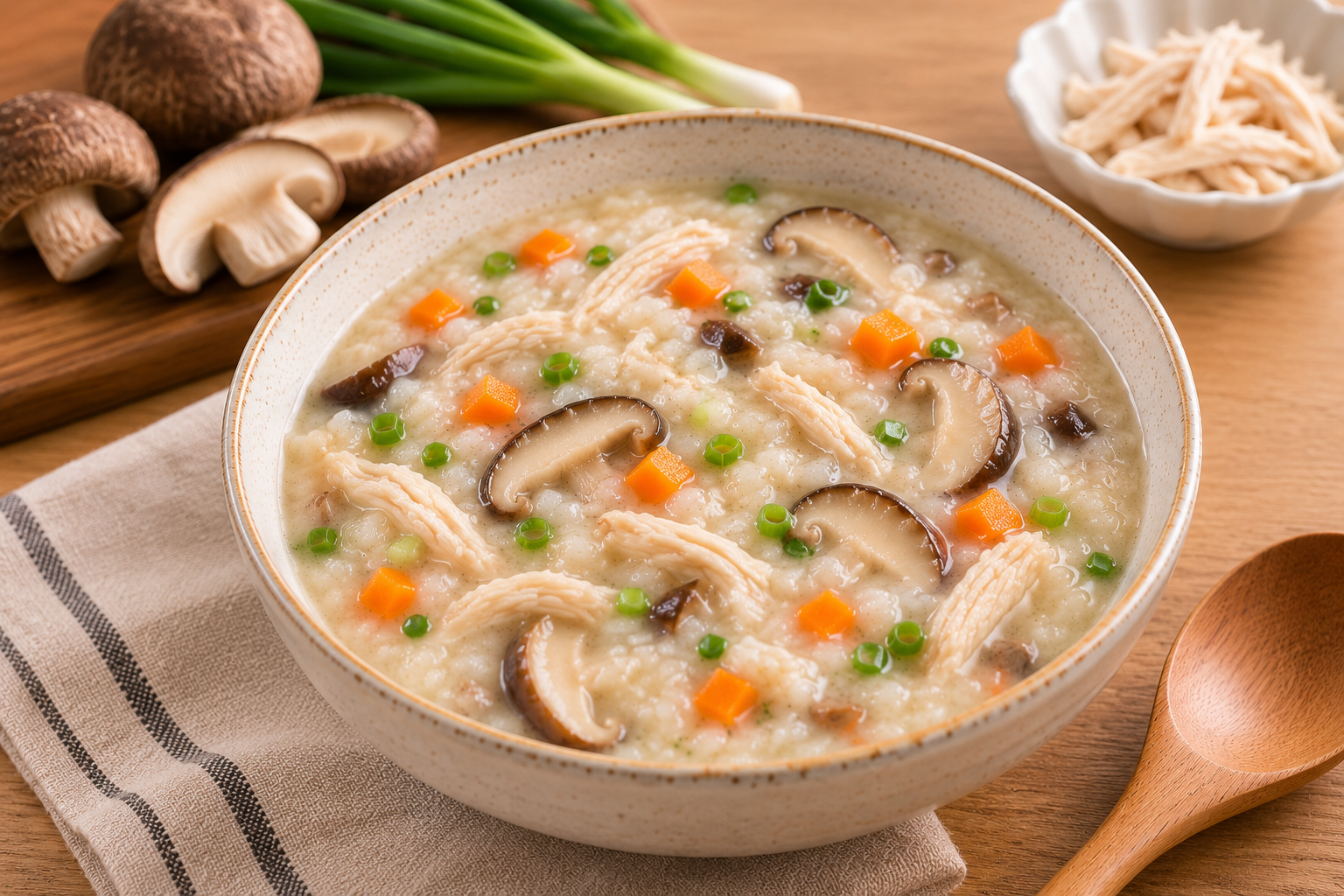
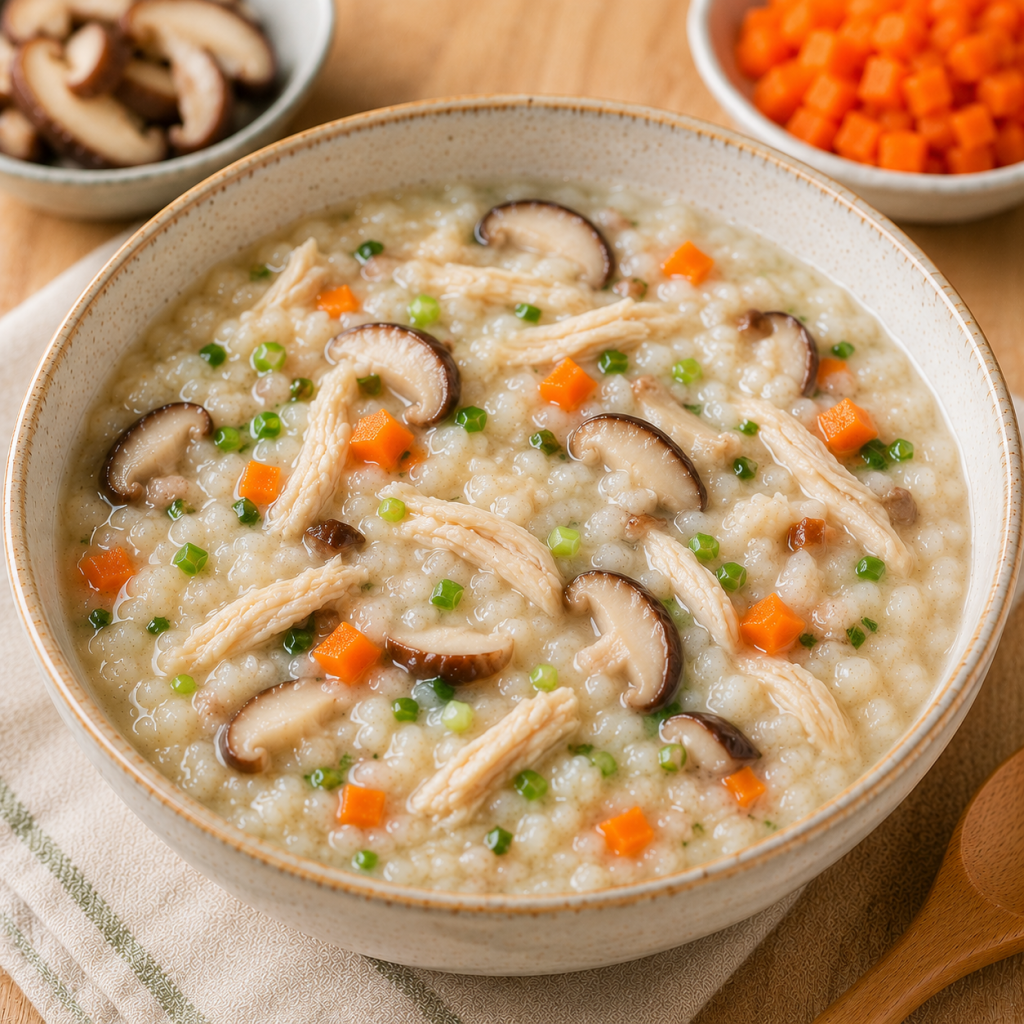
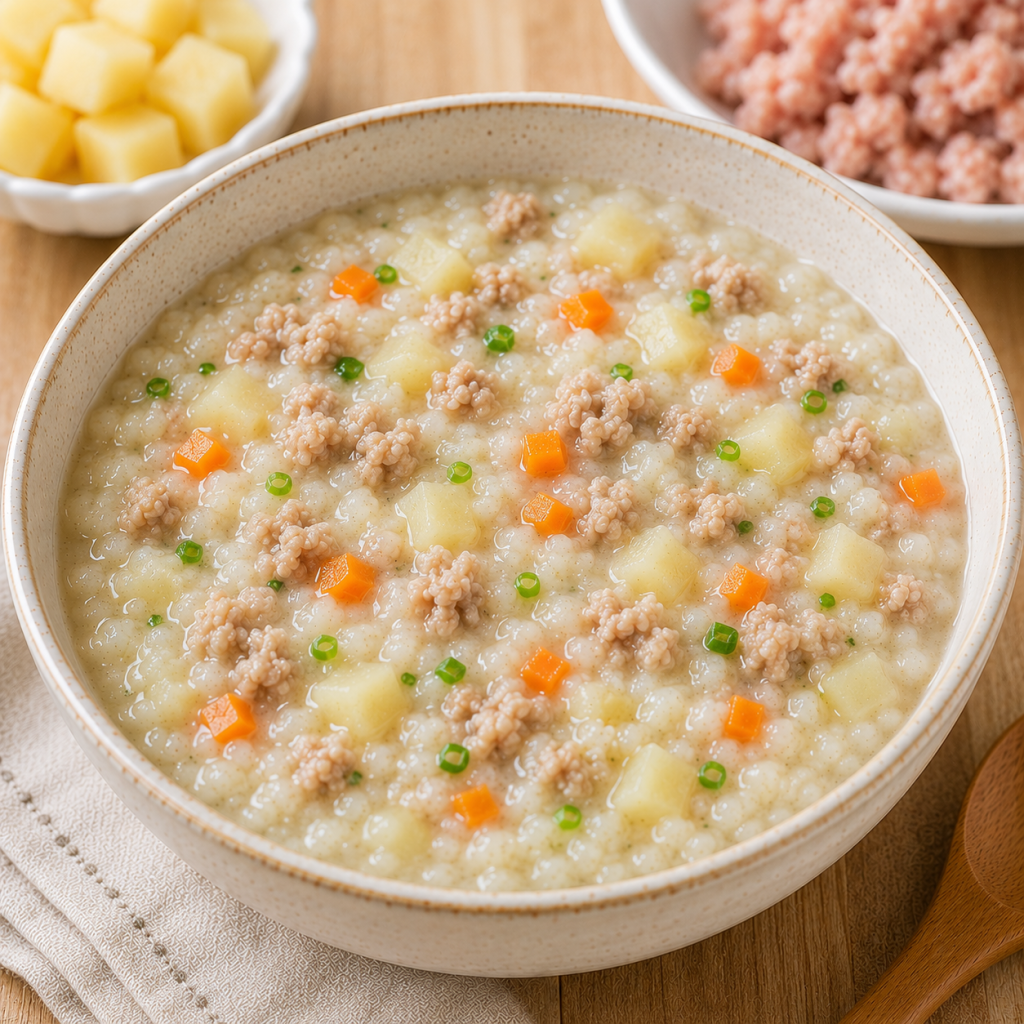
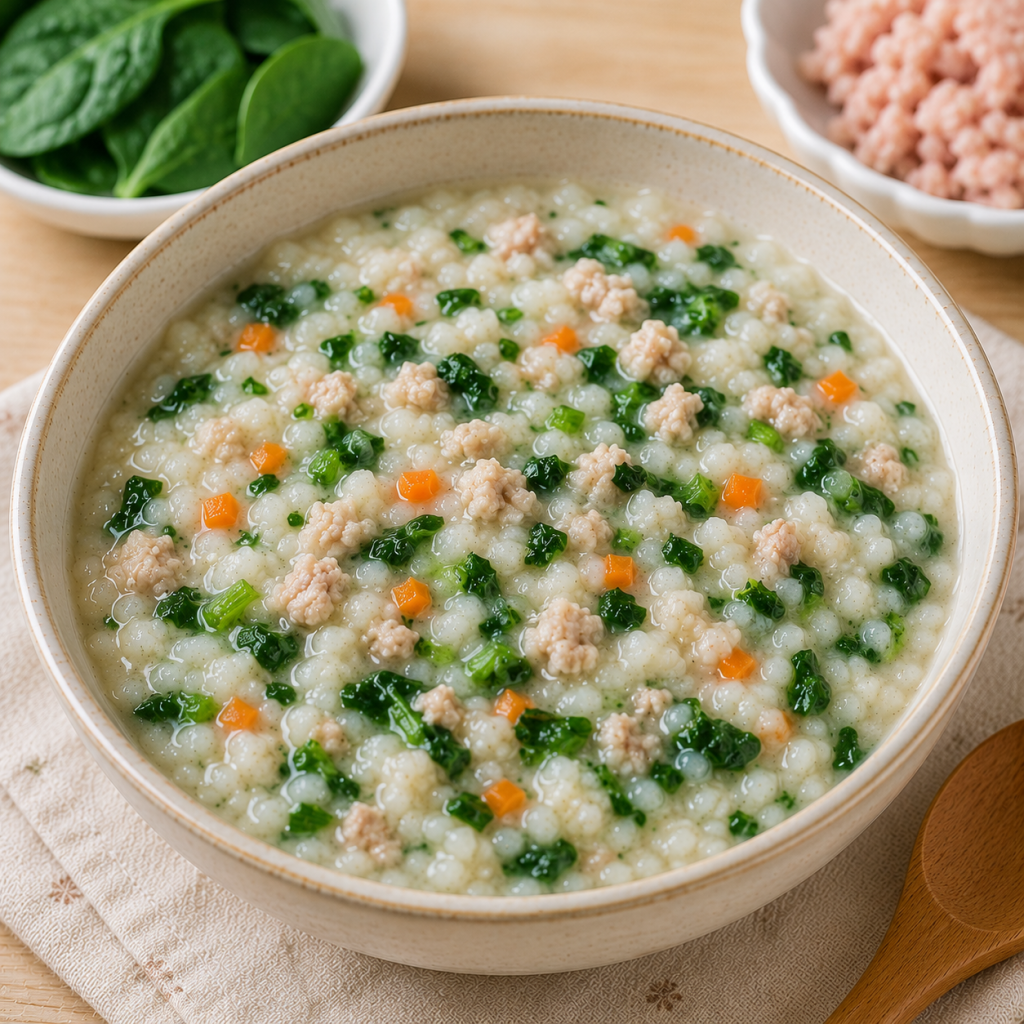
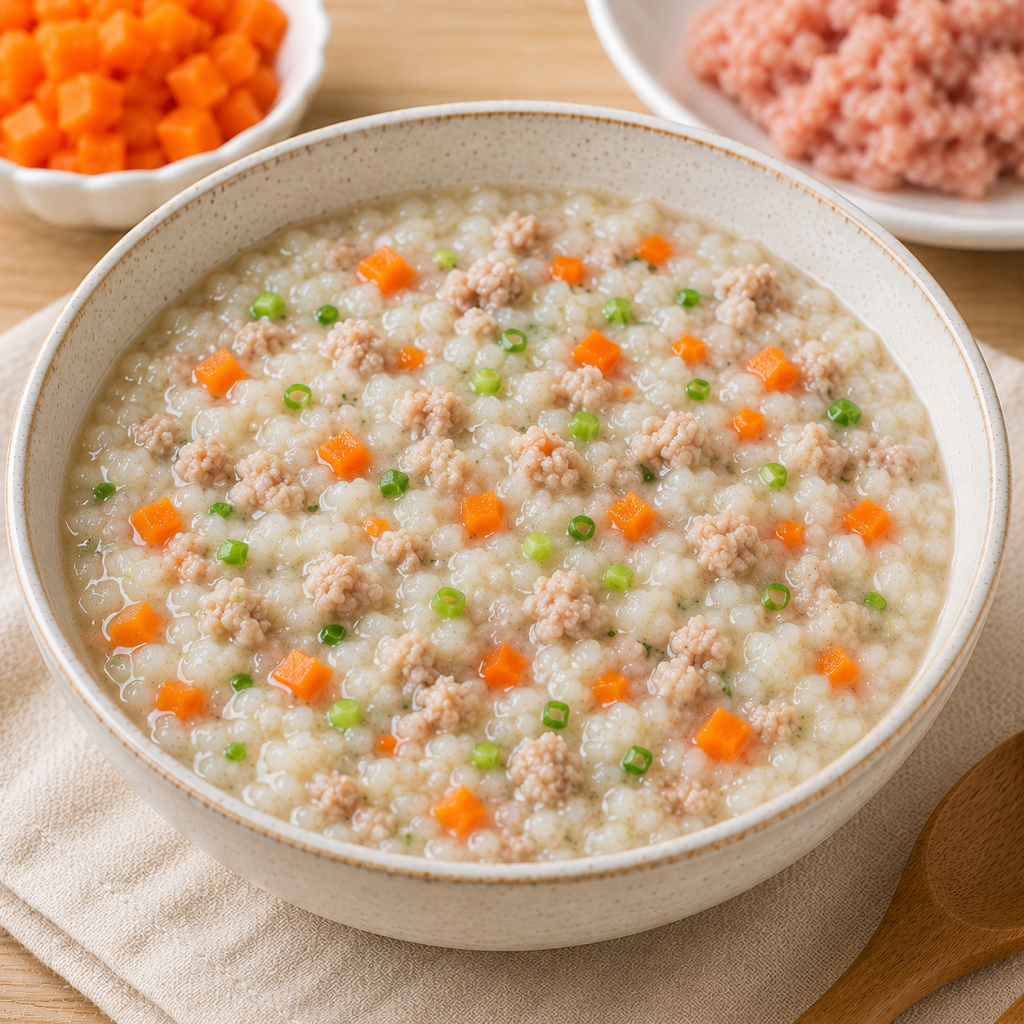
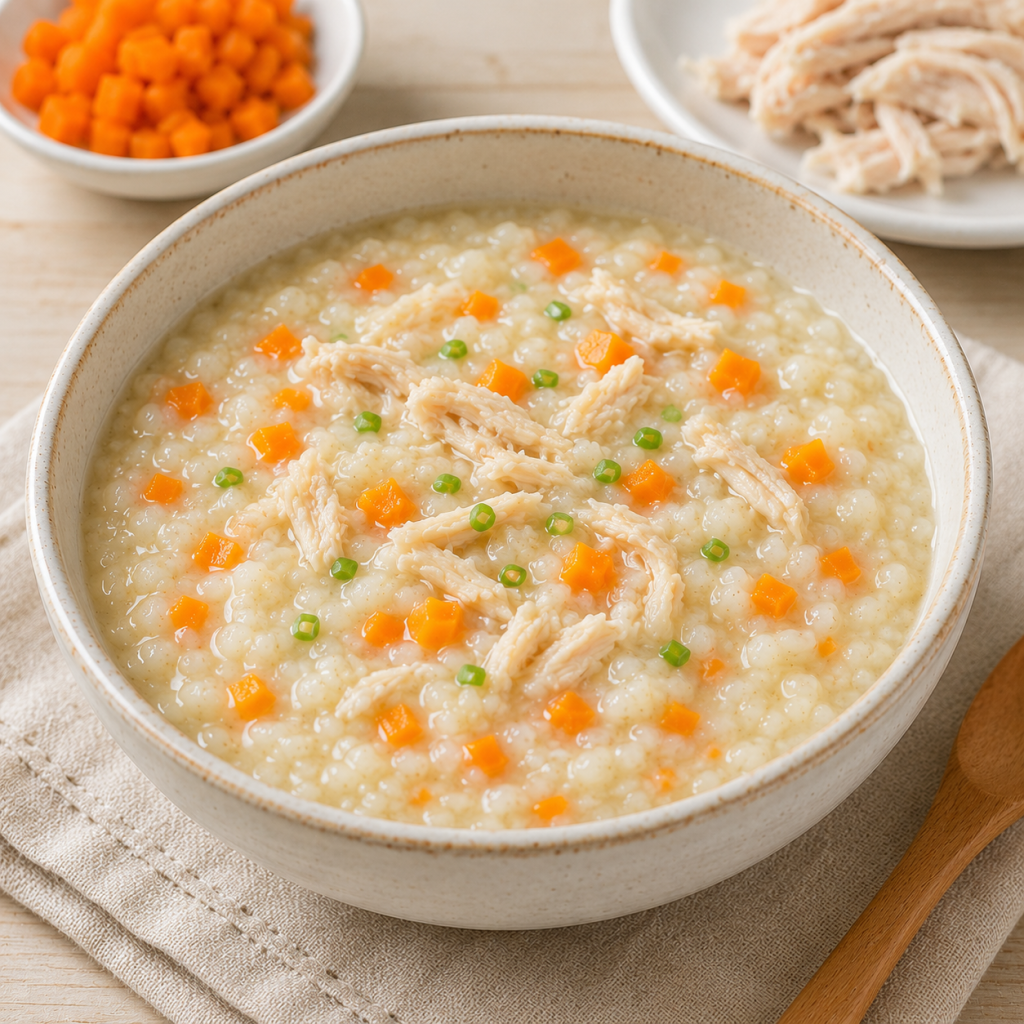
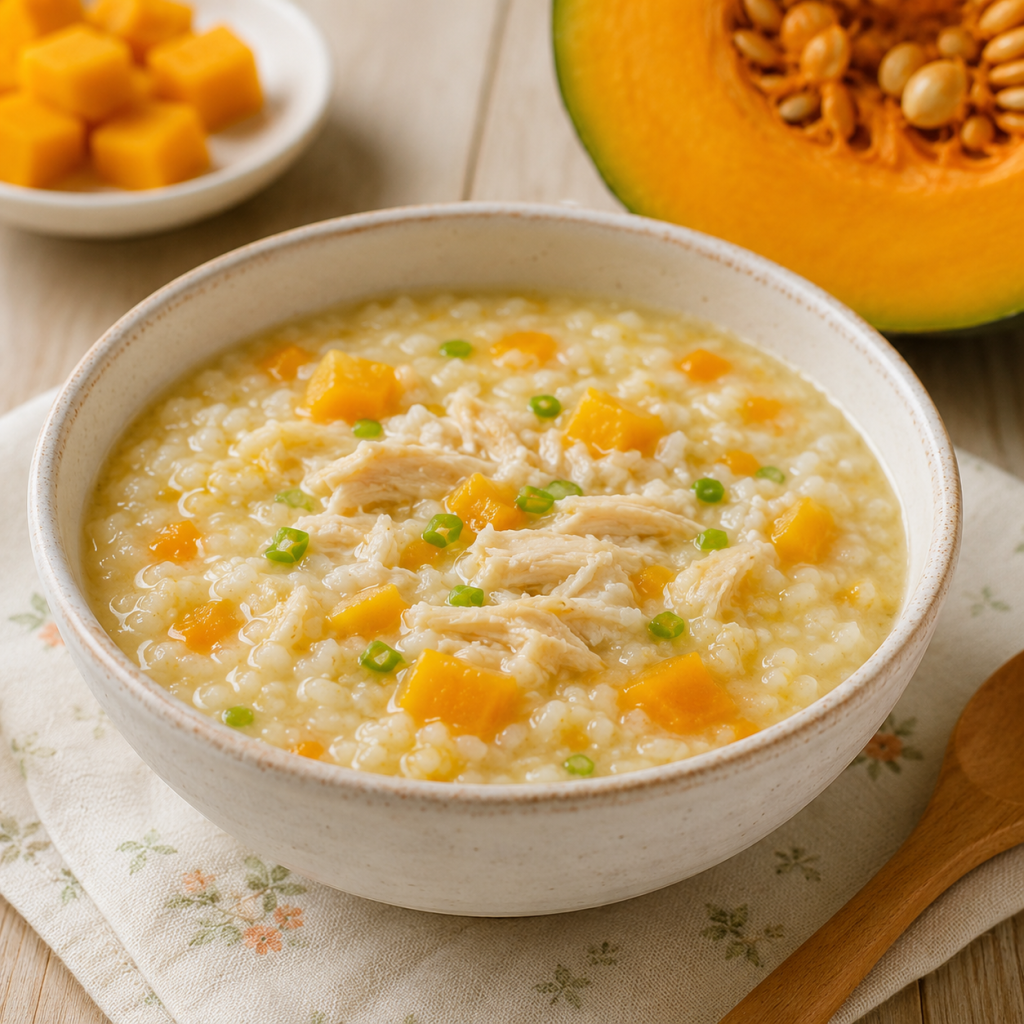
This easy chicken garden veggie porridge for baby combines soft rice, tender chicken and a colourful mix of vegetables into a simple homemade meal. Everything is cooked until soft, creating a comforting porridge that’s easy to adjust as your baby becomes more comfortable with textured foods.
This was one of the recipes I liked making when I wanted to include a little more variety in one meal. Instead of using just one vegetable, I could add a few familiar veggies my little one had already tried. It was also a useful way for me to use up small amounts of vegetables I already had in the fridge.
Suitable for: Around 8 months+*
Prep Time: 10 minutes
Cook Time: 25–30 minutes
Servings: 1–2 baby portions
*Adjust the ingredients and texture according to your baby’s feeding ability and development.
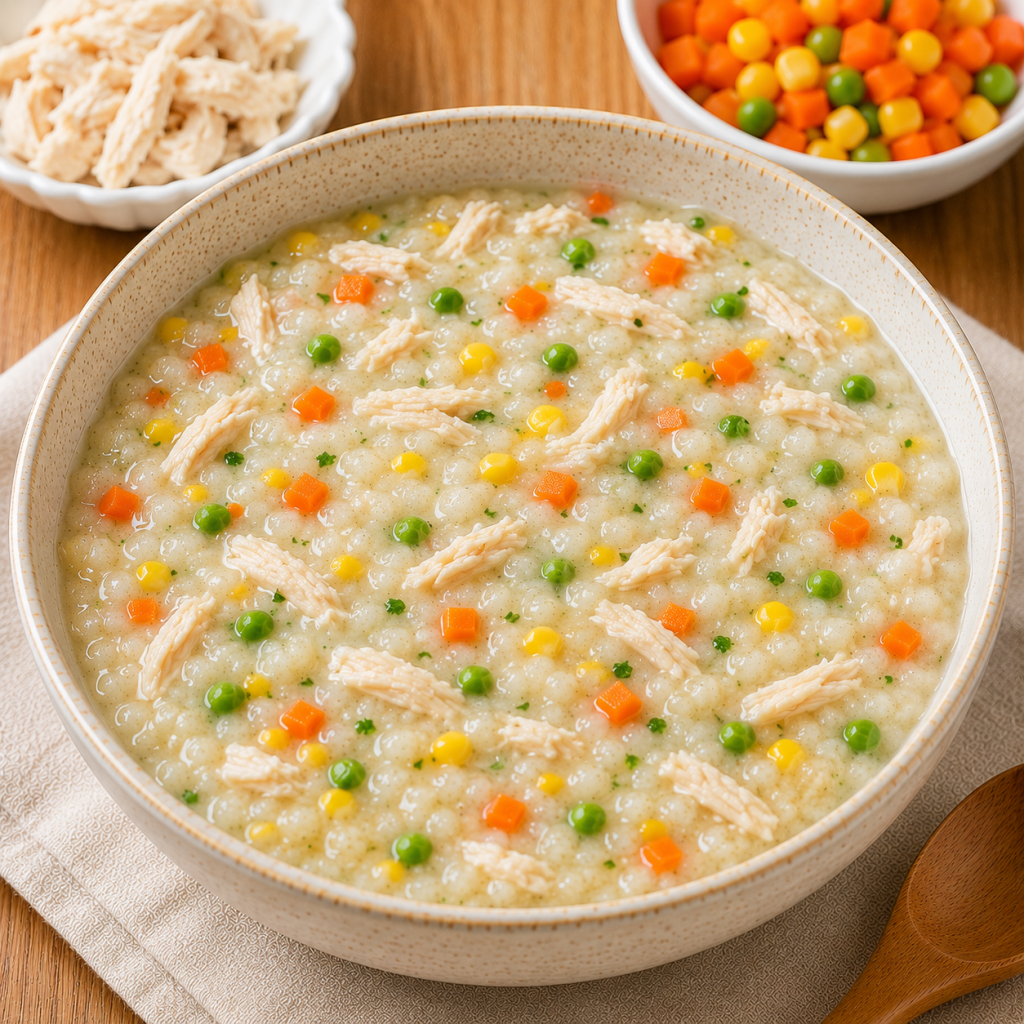
Ingredients for Chicken Garden Veggie Porridge
You only need a few simple ingredients:
- 2 tbsp uncooked rice
- 30g boneless, skinless chicken
- 2 tbsp carrot, finely diced
- 2 tbsp broccoli, finely chopped
- 2 tbsp pumpkin, finely diced
- 1–1½ cups water, as needed
Chicken with a mix of carrot, broccoli and pumpkin creates a colourful savoury porridge, with the carrot and pumpkin adding some natural sweetness.
You can also adjust the vegetables depending on what you already have at home and what your baby has previously tried.
How to Make Chicken Garden Veggie Porridge for Baby
1. Prepare the Ingredients
Rinse the rice thoroughly.
Peel and wash the carrot and pumpkin, then cut them into small pieces.
Wash the broccoli carefully and finely chop the florets.
Cut the chicken into small pieces and make sure there are no bones.
2. Cook the Rice
Place the rice and water into a small pot.
Bring to a boil, then lower the heat and simmer until the rice starts becoming soft.
3. Add the Chicken, Carrot and Pumpkin
Add the chicken, carrot and pumpkin to the porridge.
Continue cooking over low heat until the chicken is thoroughly cooked and the vegetables begin to soften.
4. Add the Broccoli
Add the finely chopped broccoli towards the later part of cooking, as it generally softens faster than carrot and pumpkin.
Continue simmering until the rice is very soft and all the vegetables can easily be mashed.
Add more water if the porridge becomes too thick.
5. Mash to the Right Texture
Once everything is fully cooked, mash the chicken and vegetables into the soft rice using the back of a spoon or fork.
For babies transitioning from smoother foods, you can briefly blend the porridge.
As your baby progresses, gradually leave more texture.
6. Serve Warm
Transfer the chicken garden veggie porridge for baby into a clean bowl and allow it to cool to a suitable temperature before serving.
There’s no need to add salt, stock cubes or other seasoning.
Mum Tip
For this recipe, I prefer using vegetables my little one has already tried individually rather than introducing several completely new ingredients in the same meal.
I also don’t follow the exact same vegetable combination every time. If I have carrot, pumpkin and broccoli, I’ll use those. On another day, I might swap one for potato or spinach.
For me, “garden veggie” is really about using a small variety of familiar vegetables to make mealtime a little more colourful.
Make Weekday Baby Porridge Easier
As a working mum, this is one recipe where preparing ingredients ahead makes a big difference.
I like cutting vegetables into small portions and portioning chicken into meal-sized amounts. When it’s time to cook, I can simply pick a few vegetables and add them to the porridge instead of washing and chopping everything from scratch.
What I Use for Baby Meal Prep:
- Reusable food ziplock pouches
- Baby food storage containers
- Silicone freezer trays
- Mini food chopper or grinder
Add your Shopee affiliate links here.
How to Choose Chicken and Vegetables for Baby Porridge
For chicken, choose:
- Fresh boneless chicken
- Chicken that has been properly refrigerated
- Meat with no unusual smell or appearance
For vegetables, choose ones that:
- Look fresh and firm
- Have no mouldy or spoiled areas
- Are thoroughly washed before cooking
- Are suitable for cooking until soft
I personally like using a mixture of colours when possible, such as orange carrot, pumpkin and green broccoli.
What Texture Should Chicken Garden Veggie Porridge Be?
For babies transitioning from puree:
Cook everything until very soft, then mash thoroughly or briefly blend the porridge into a smoother consistency.
As baby progresses:
Gradually mash less and leave the rice, chicken and vegetables with more noticeable texture.
Because this recipe contains several vegetables, I like chopping everything quite small before cooking so the final texture stays manageable.
How to Store Chicken Garden Veggie Porridge
Because this recipe contains cooked rice and chicken, cool any portion you’re keeping promptly and transfer it into a clean, airtight container in the refrigerator.
I personally prefer making baby porridge in smaller batches. If I prepare extra, I portion it straight away so I only need to take out what I need for each meal.
What Vegetables Can I Use in Garden Veggie Porridge?
Once your baby has tried the individual ingredients, you can experiment with combinations such as:
- Chicken + Carrot + Pumpkin + Broccoli
- Chicken + Carrot + Potato + Spinach
- Chicken + Pumpkin + Broccoli + Potato
- Chicken + Sweet Potato + Carrot + Broccoli
- Chicken + Pumpkin + Spinach + Carrot
You don’t need to use every vegetable at once. Two or three vegetables are already enough to create different combinations throughout the week.
SHOP SY PICKS
These are the simple tools I use at home to make baby food prep quicker and easier. Nothing fancy, just a few practical essentials that make cooking, portioning and storing meals much more convenient.

Perfect for blending baby food smoothly. Makes preparing homemade purees quick, easy and convenient for everyday meals.
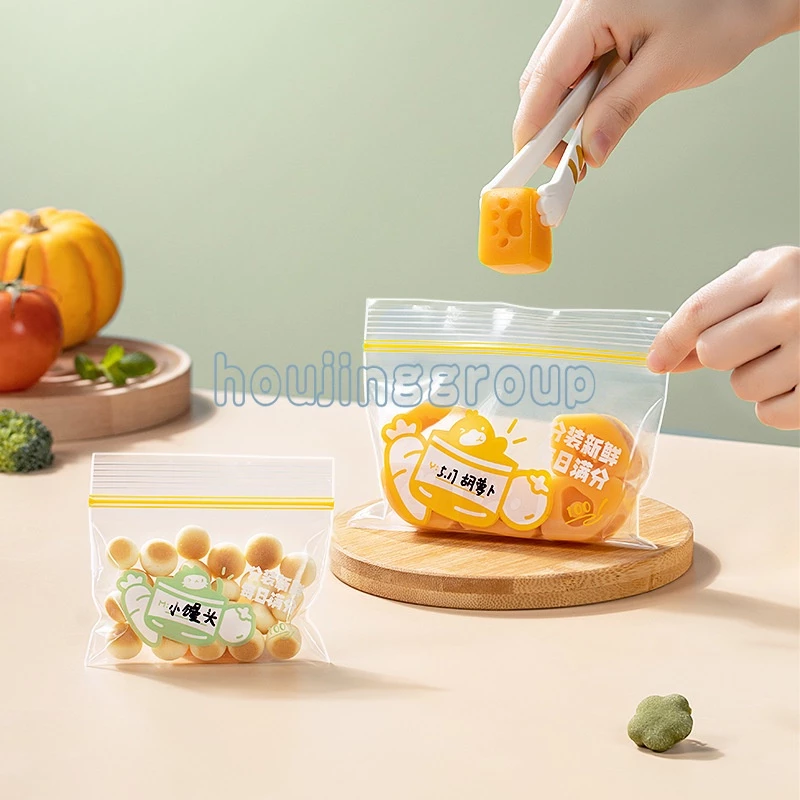
Perfect for storing and portioning baby meals. Keeps each serving organised and makes freezing and meal prep much easier.
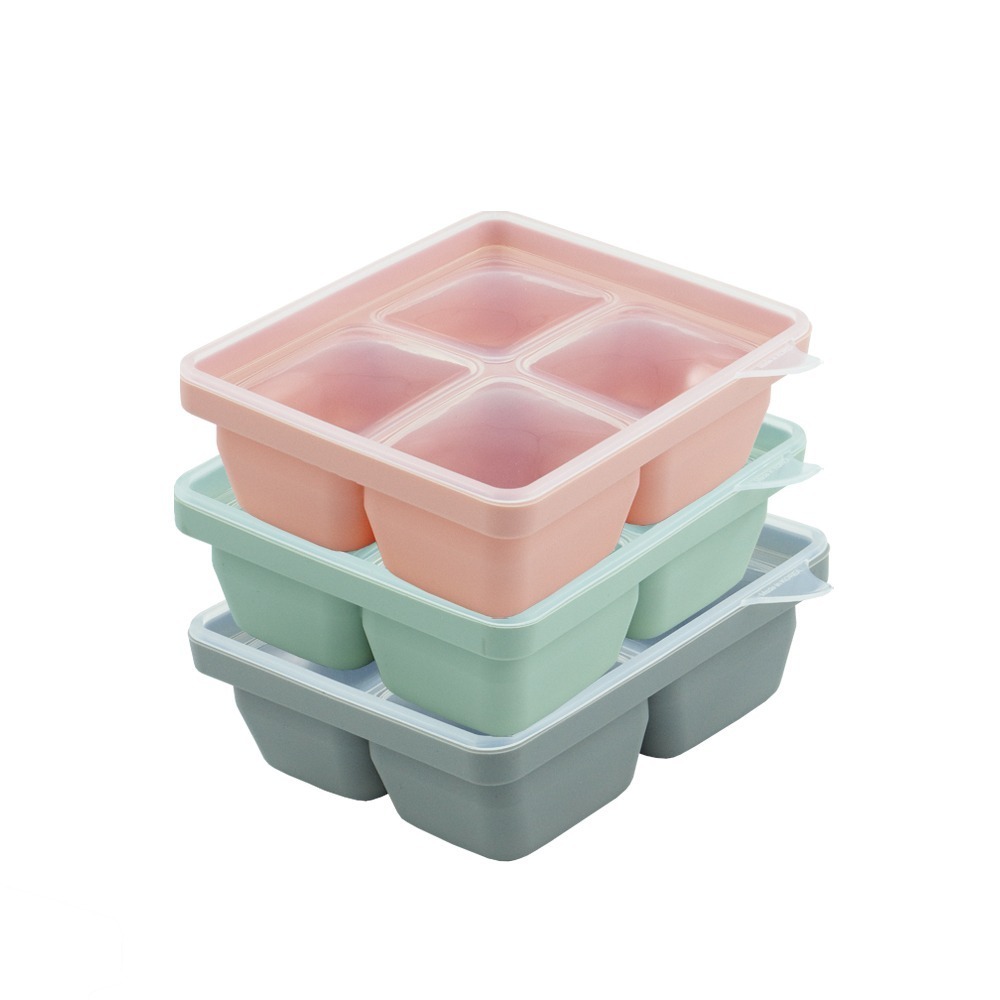
Perfect for freezing baby food portions. Makes storing homemade purees simple, organised and convenient for everyday meals.
Frequently Asked Questions
This article shares my personal experience and general information and should not replace individual medical or feeding advice. Babies develop at different rates. Speak with your child’s healthcare professional before starting solids if you have concerns about developmental readiness, growth, allergies or feeding.
About the author
SY is a mum of one and the founder of PicksBySY. Like many mums, she’s constantly learning, discovering and figuring things out as her little one grows. She created PicksBySY to share her real parenting experiences, useful finds and everyday discoveries – from baby milestones and toddler life to family activities and products she genuinely uses and loves.